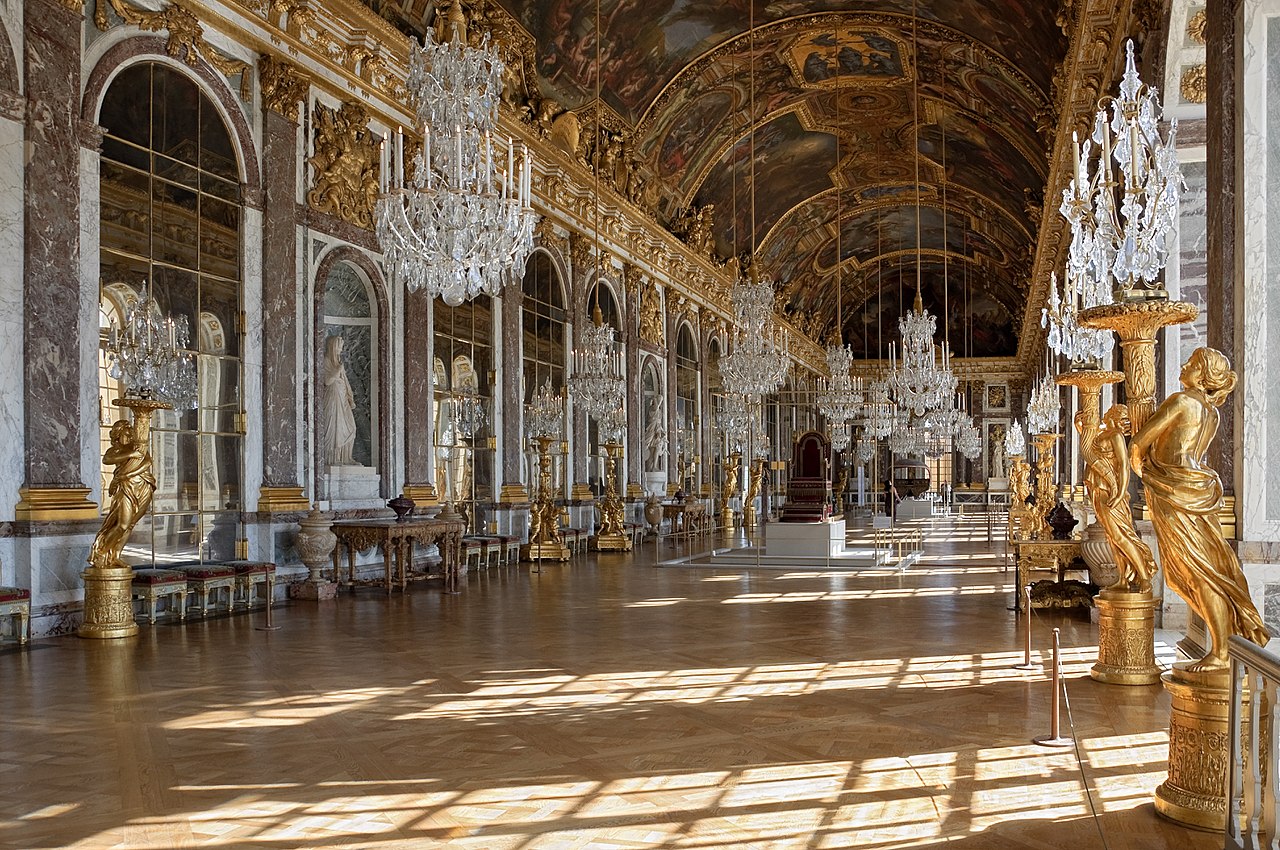


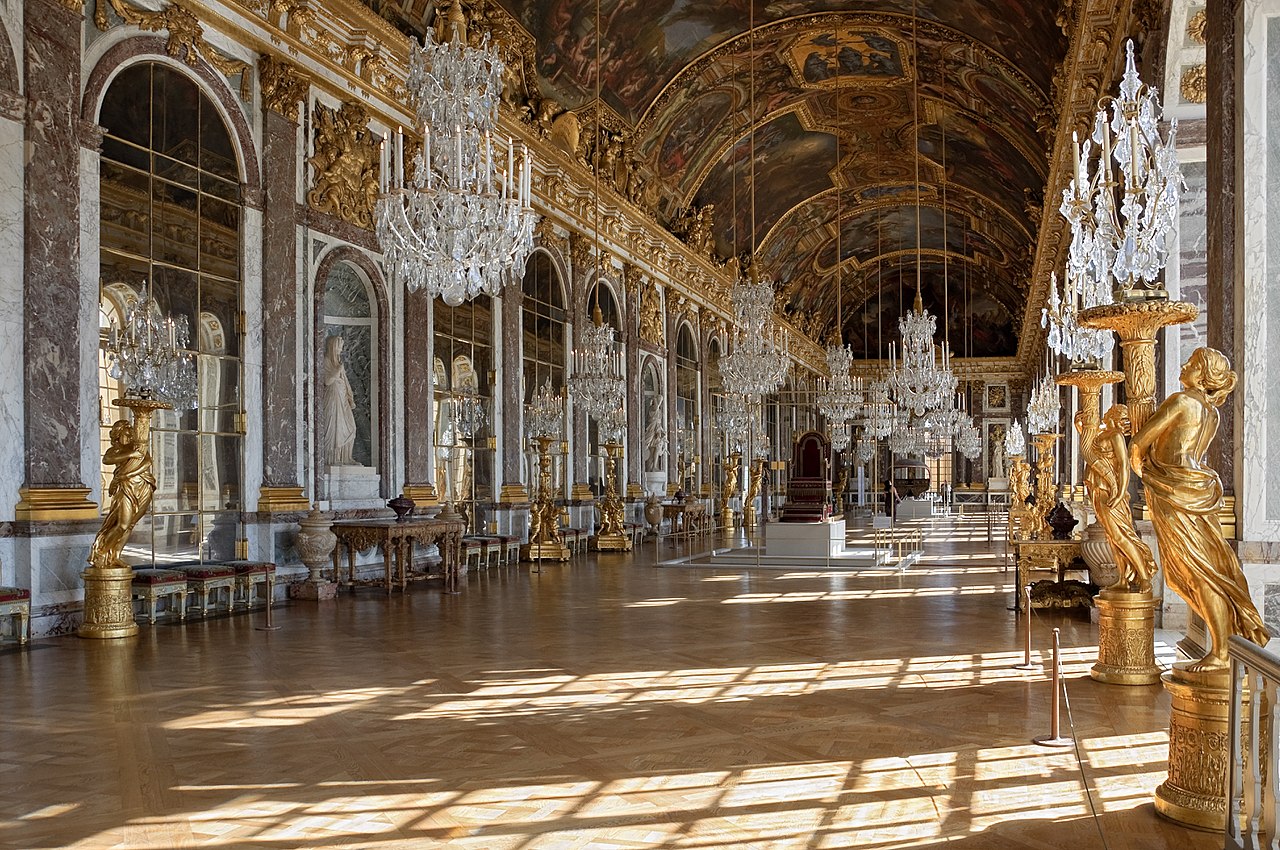
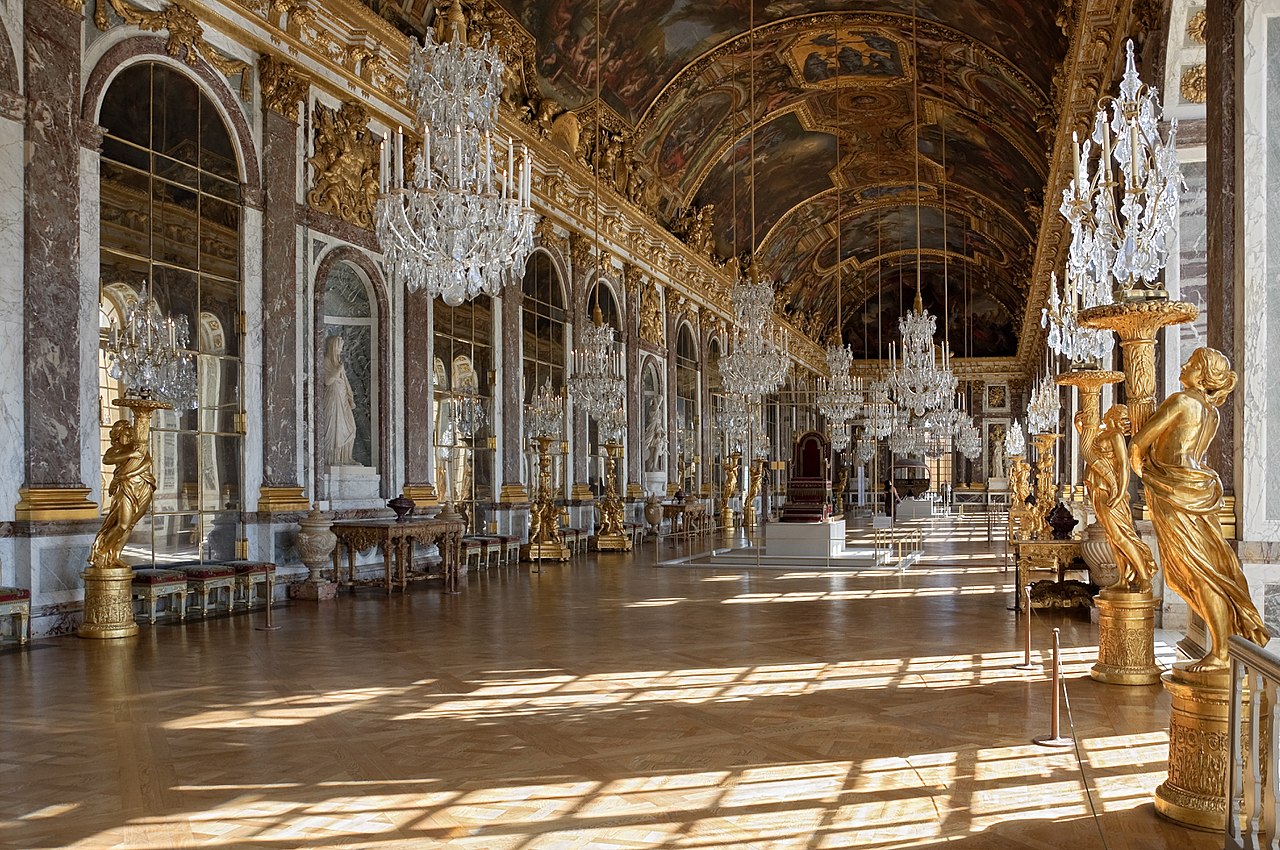
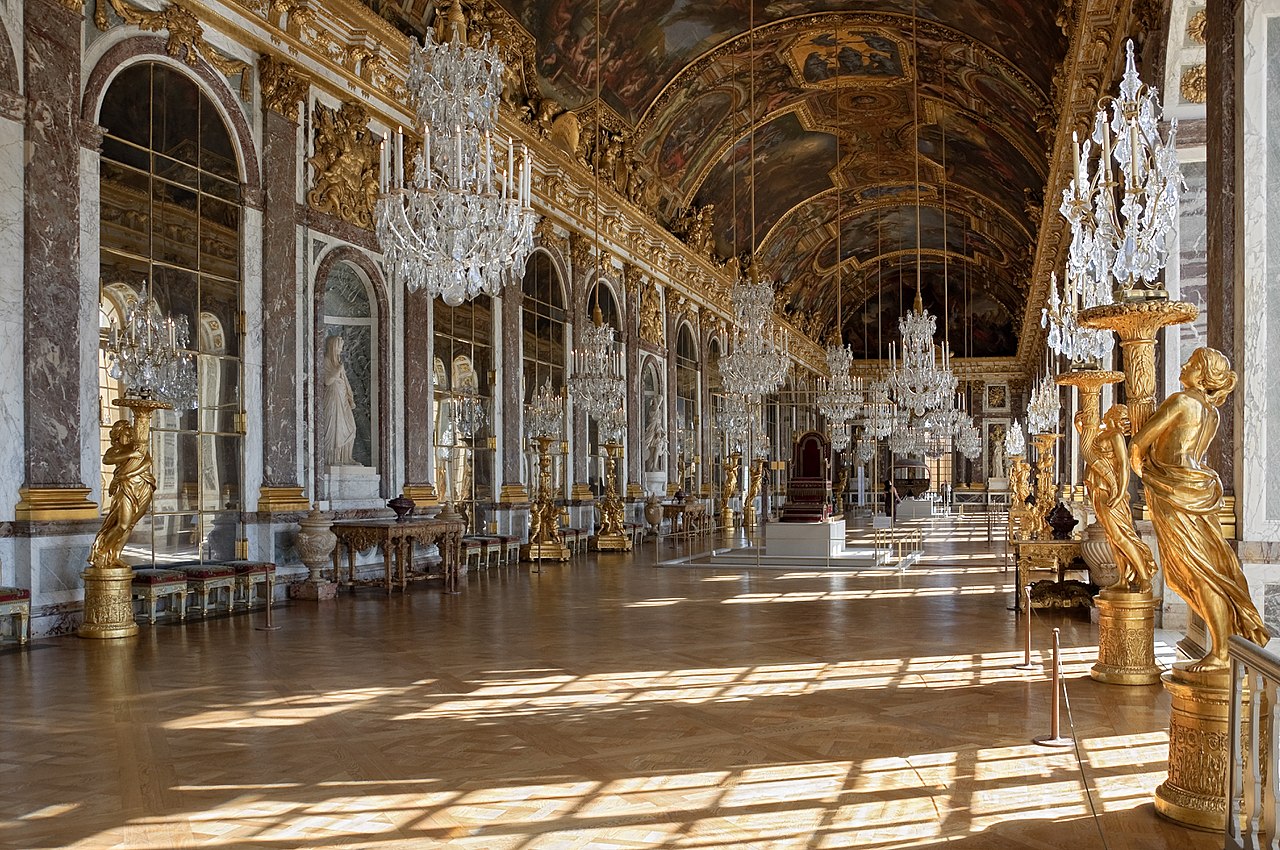
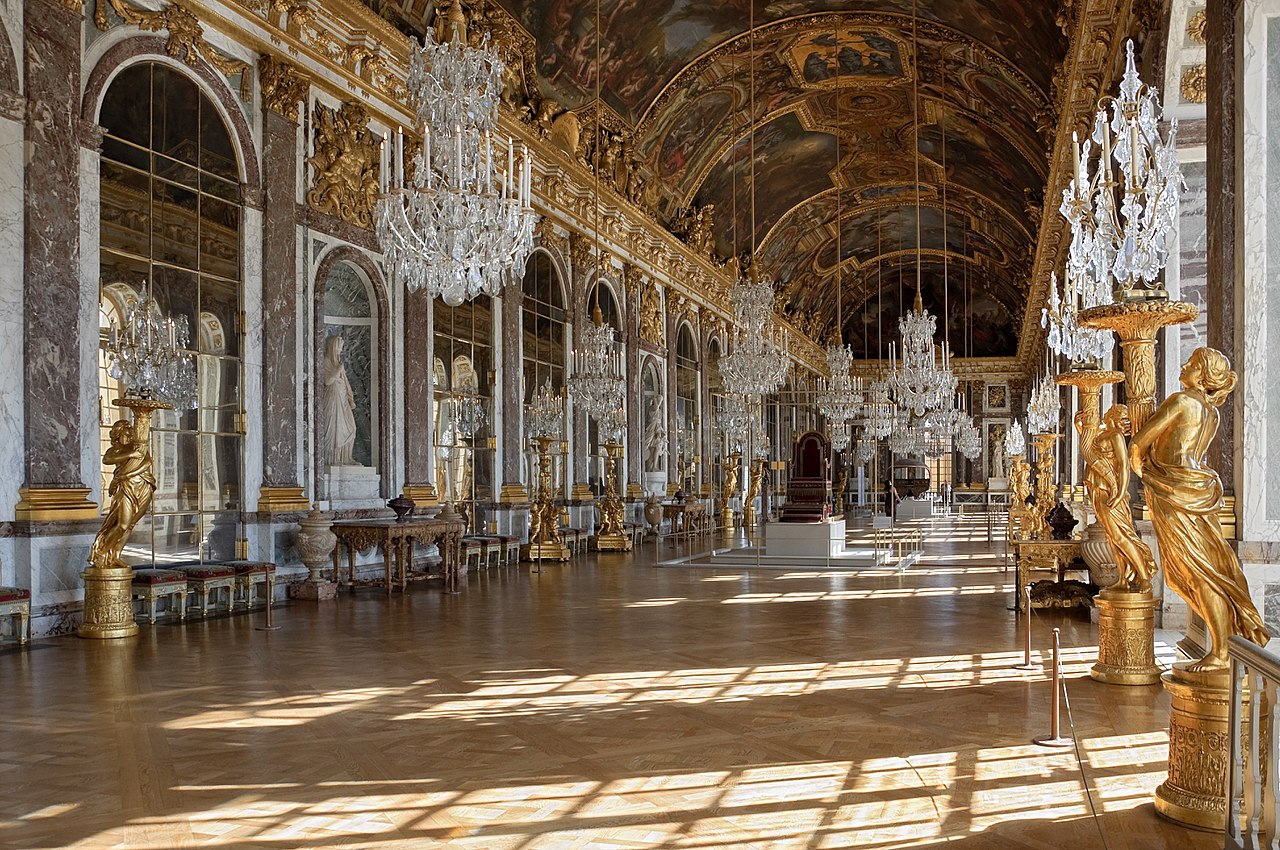
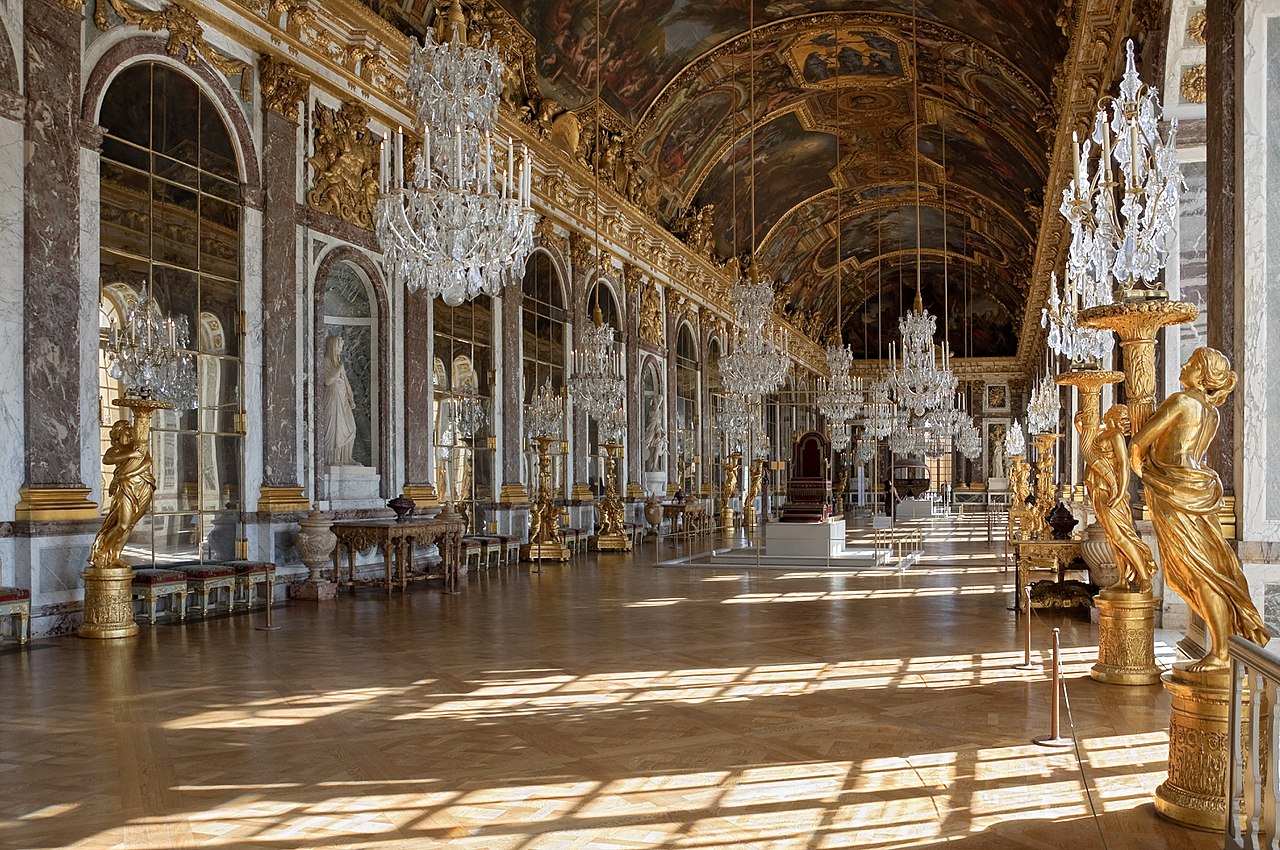
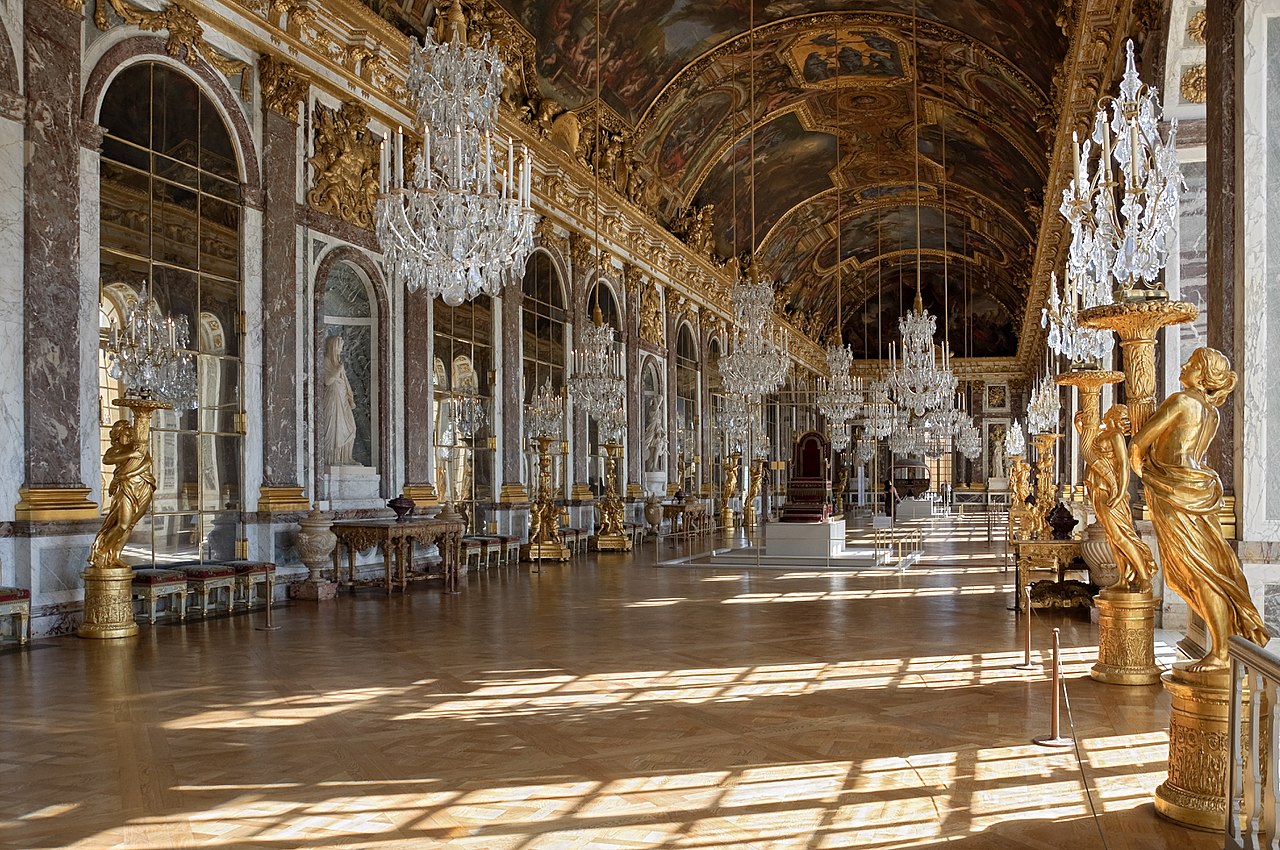
The Hall of Mirrors is one of the most famous rooms in the Palace of Versailles.
It was one of the most dazzling displays of wealth in the 17th century and the envy of other European courts.
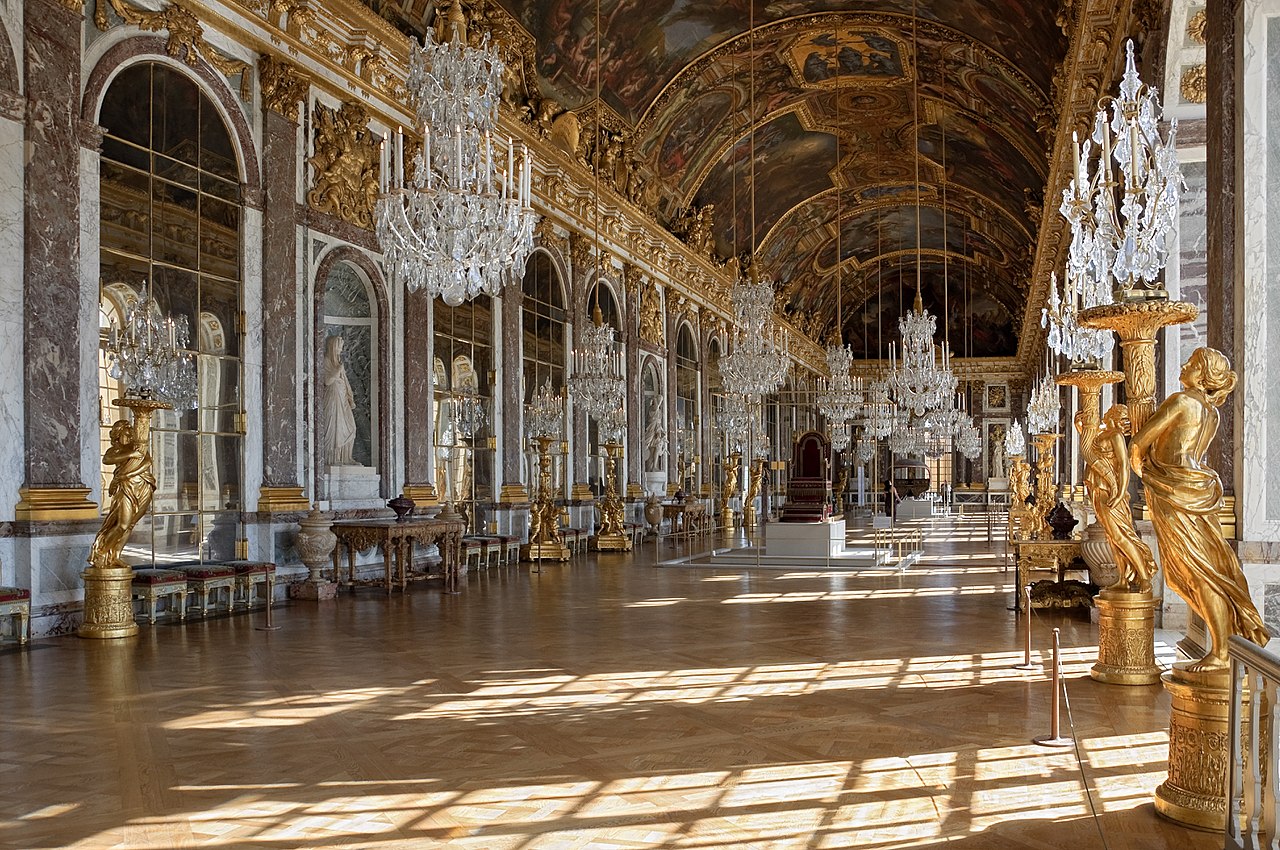
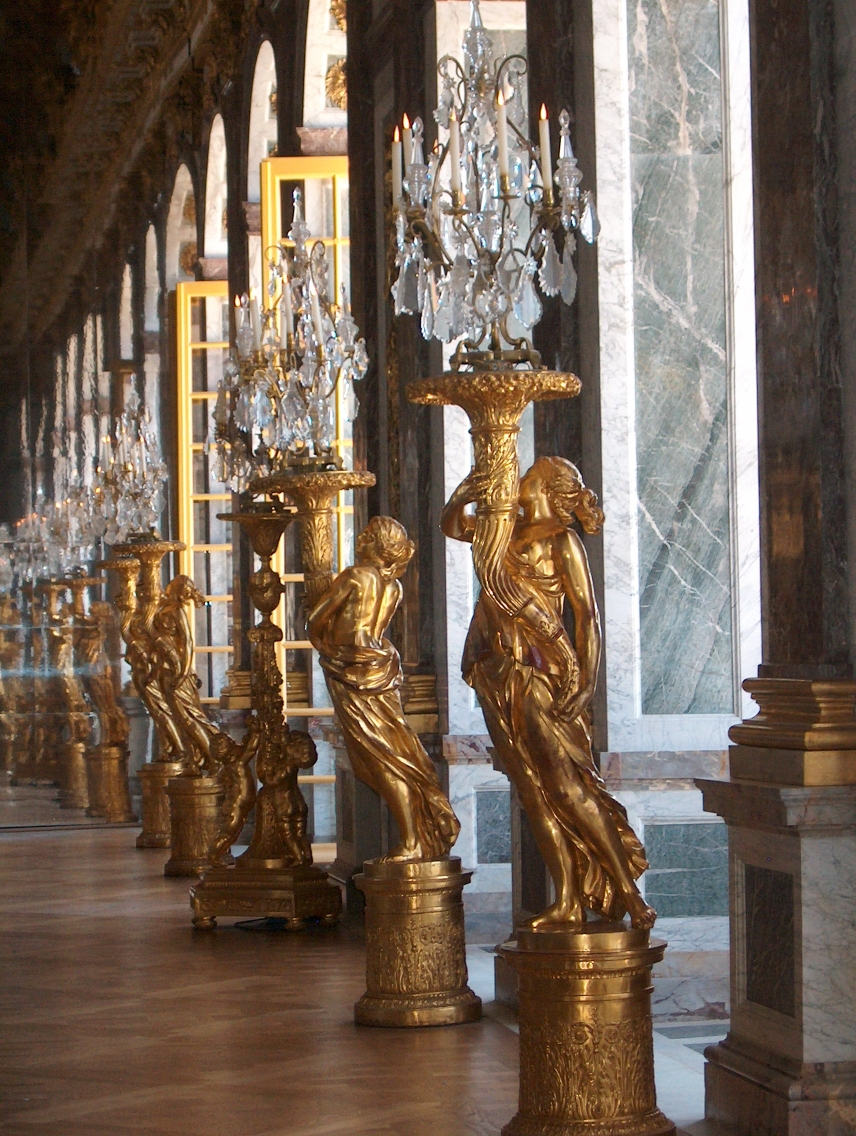
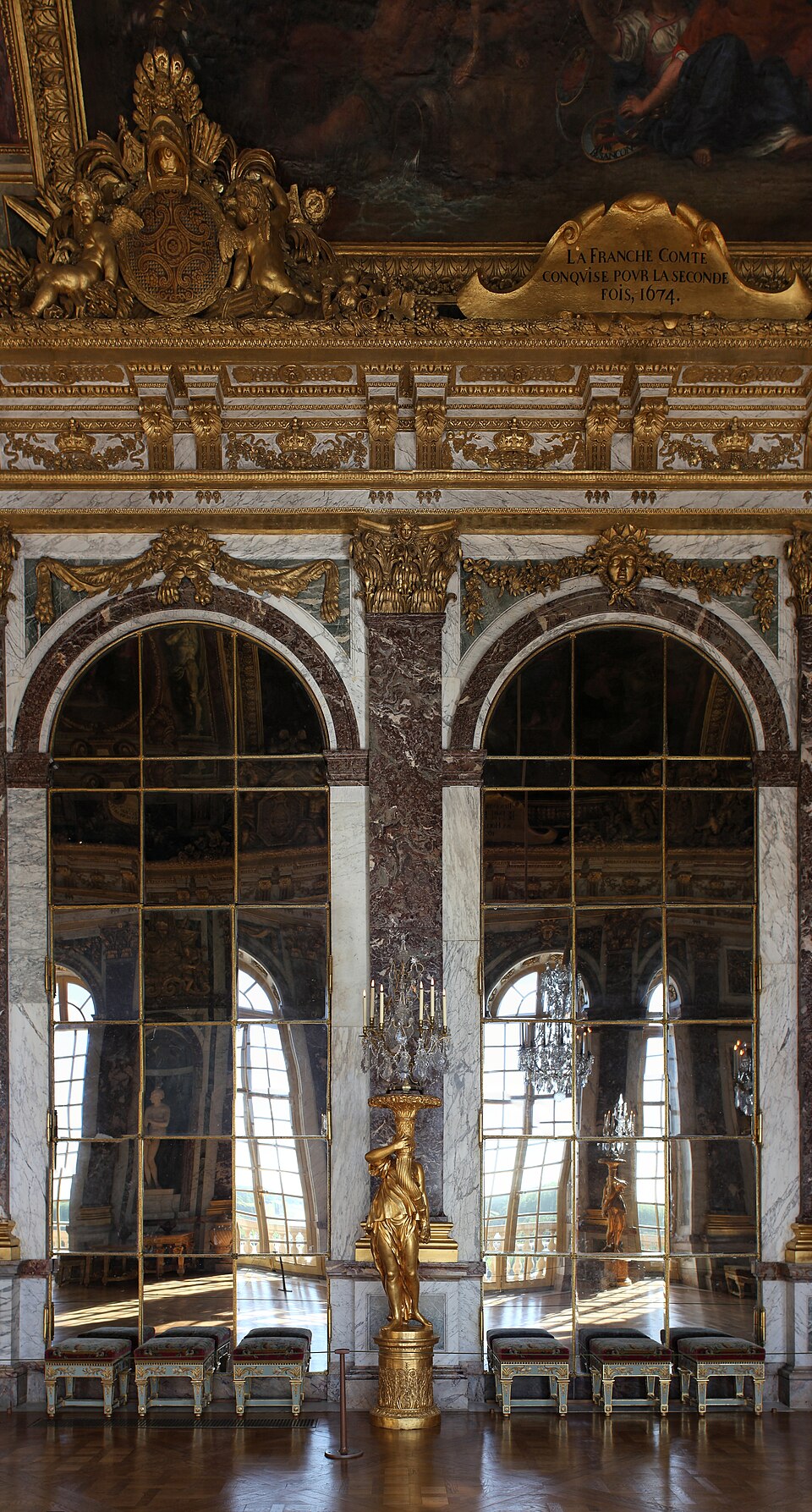
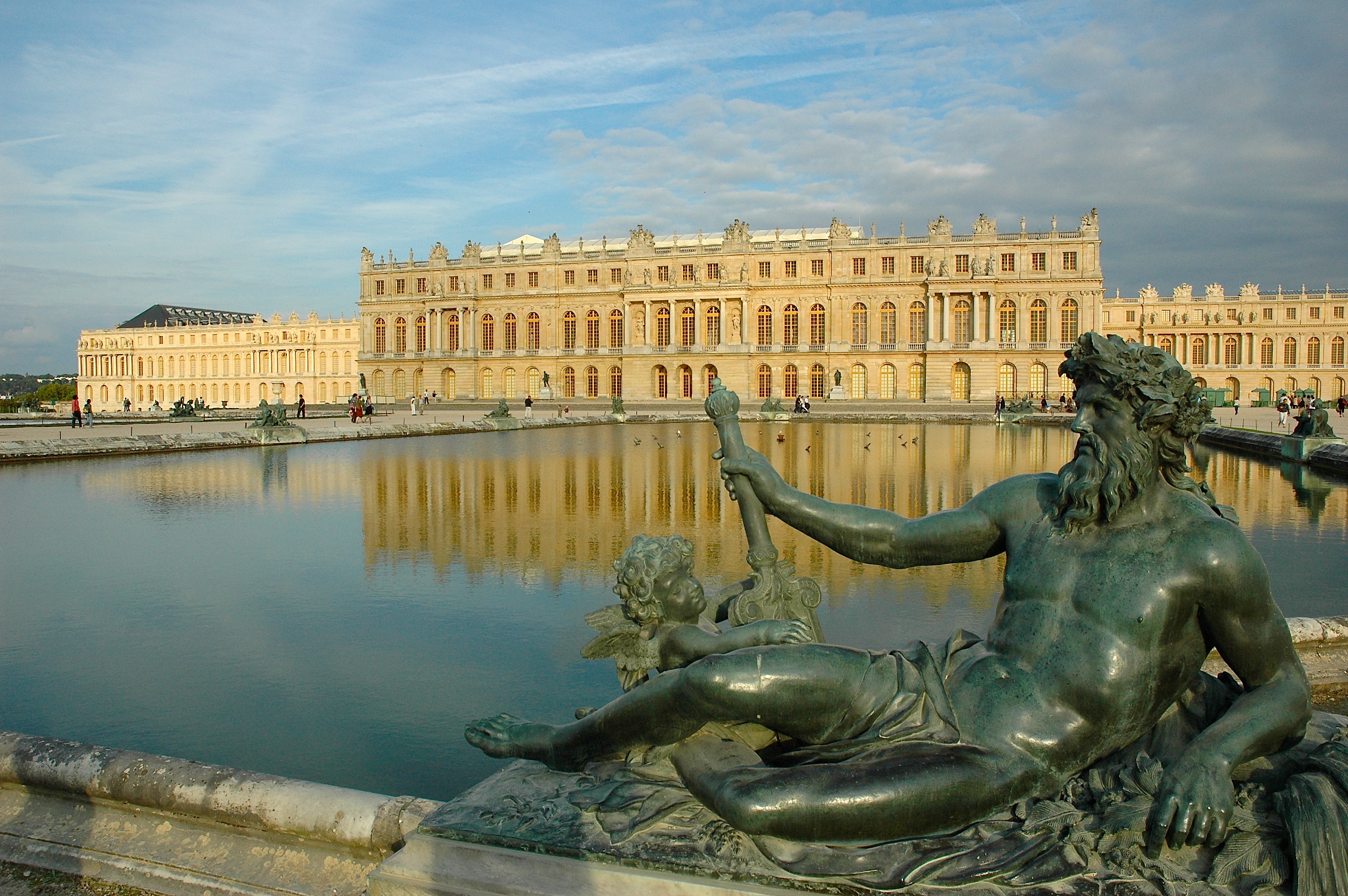
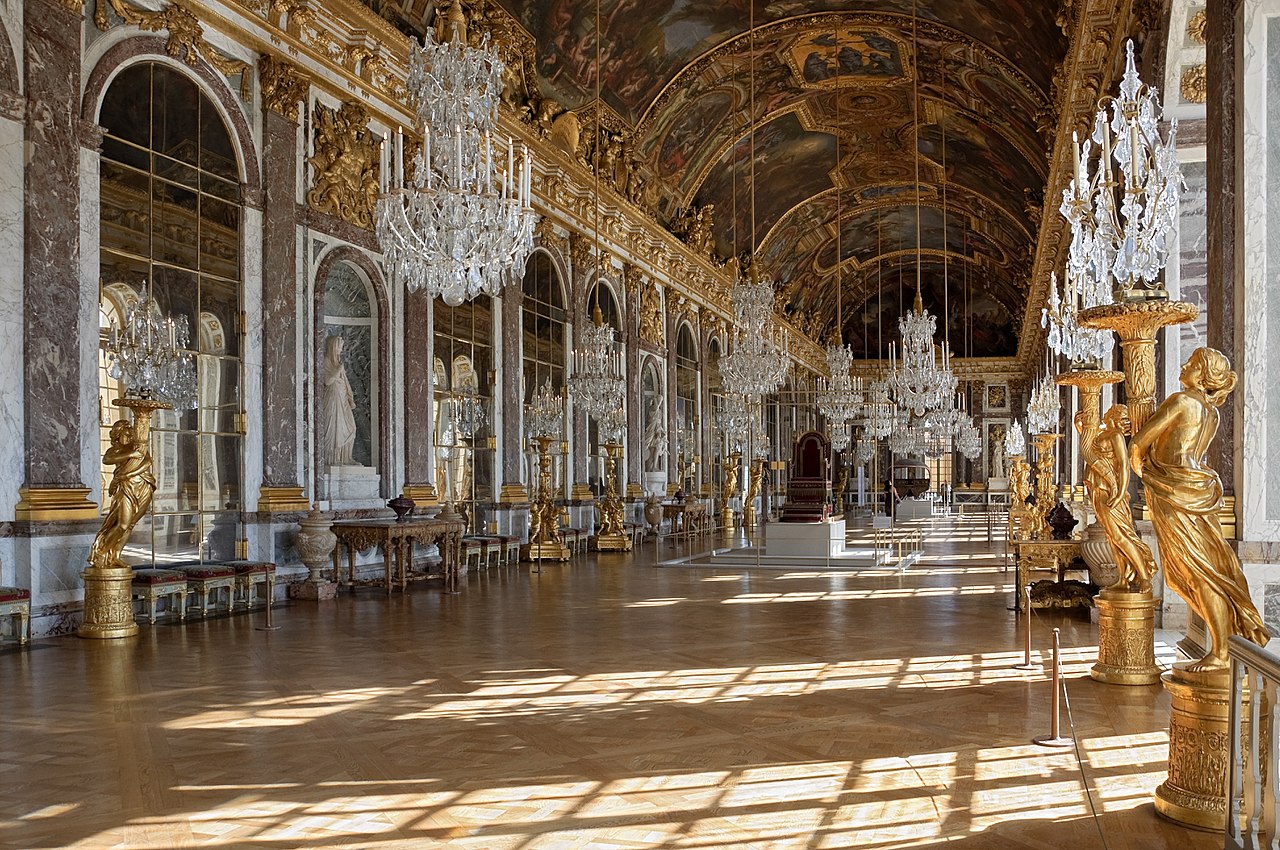
The gallery measures a massive 70 x 10m and overlooks the gardens.
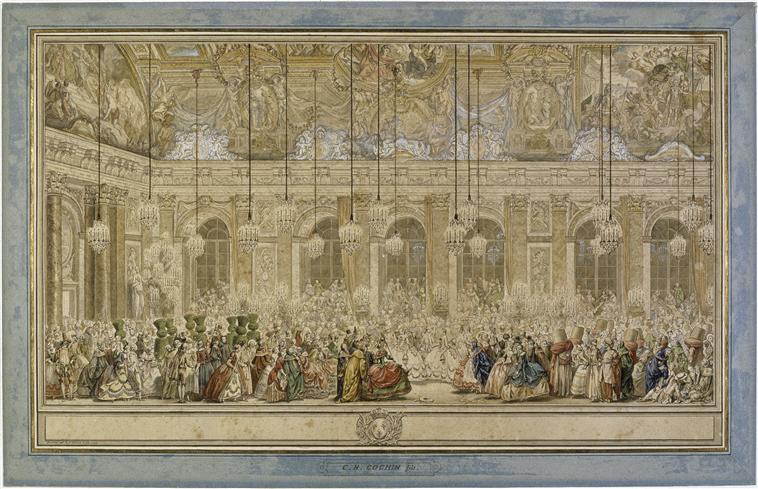
It was filled with silver furniture (which was later melted down to finance Louis XIV's wars) and hosted balls, weddings, diplomatic missions - and could also be used by courtiers during the day.
In the evenings it was lit by thousands of candles, reflected in the mirrors panels.
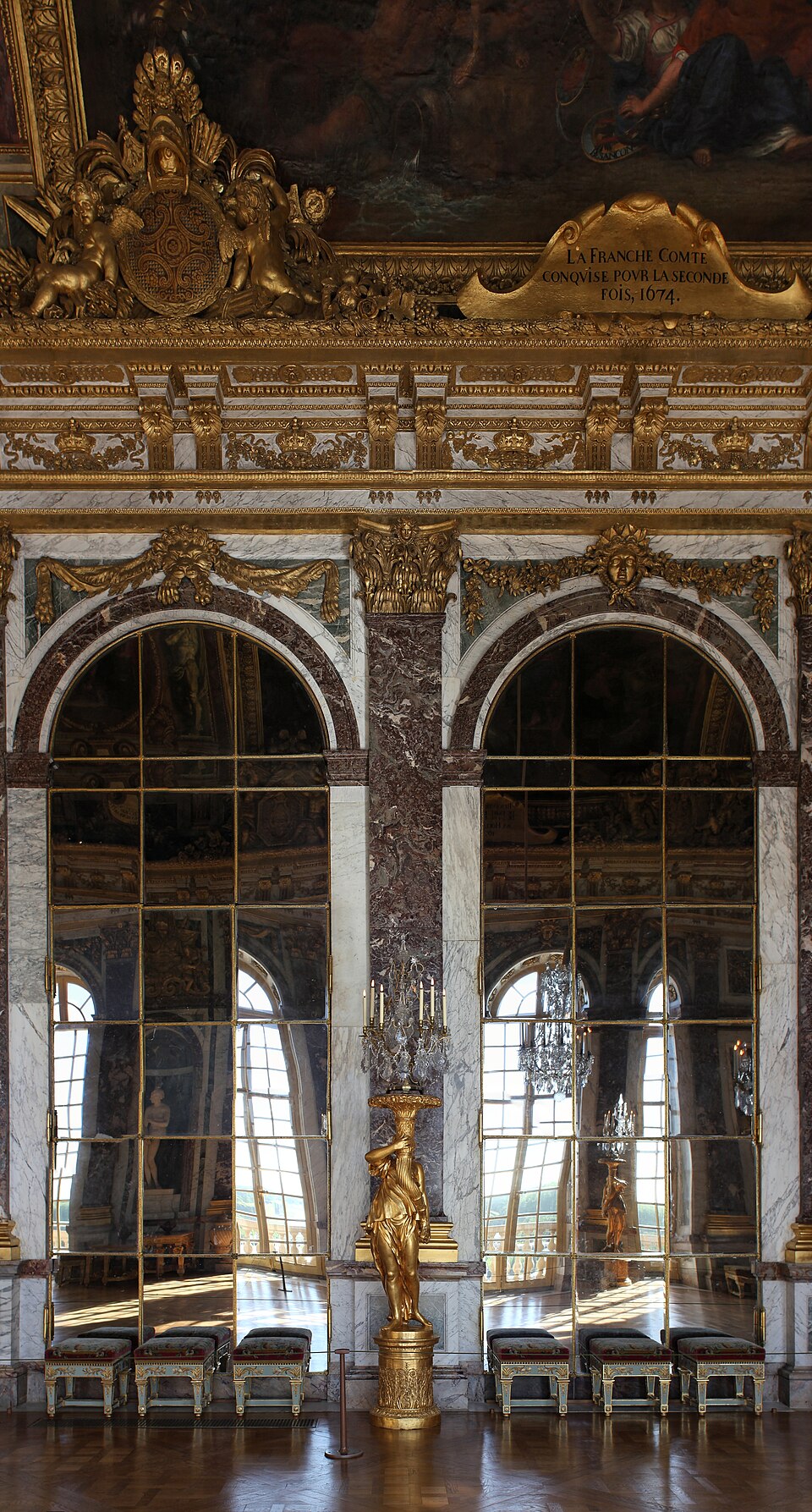
The 350 mirrors are the most famous feature of the gallery.
The ability to produce so many mirrors, and to such high standards, was a testament to the French king's incredible wealth.
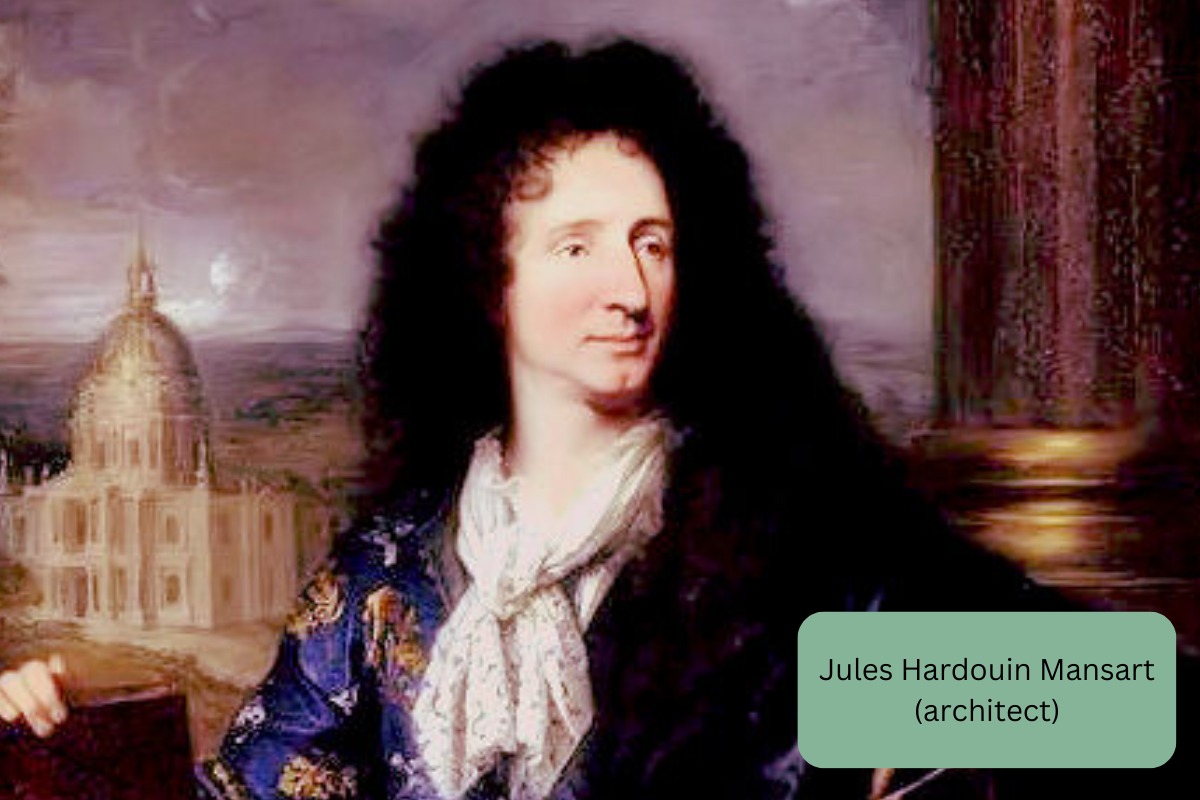
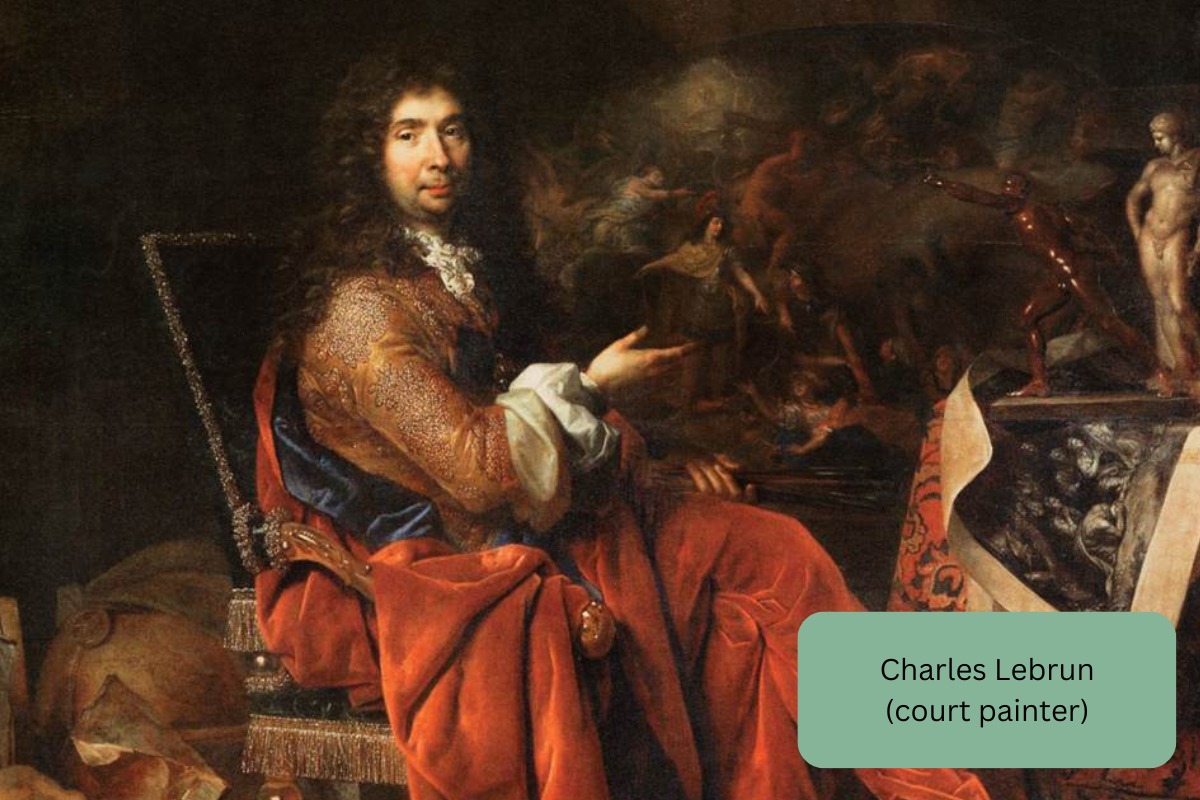
Fun fact : some say that the idea of decorating the gallery with mirrors came from Louis XIV's chief architect, Mansart, who didn't want to give his rival, the chief artist Le Brun, more space to impress the king!
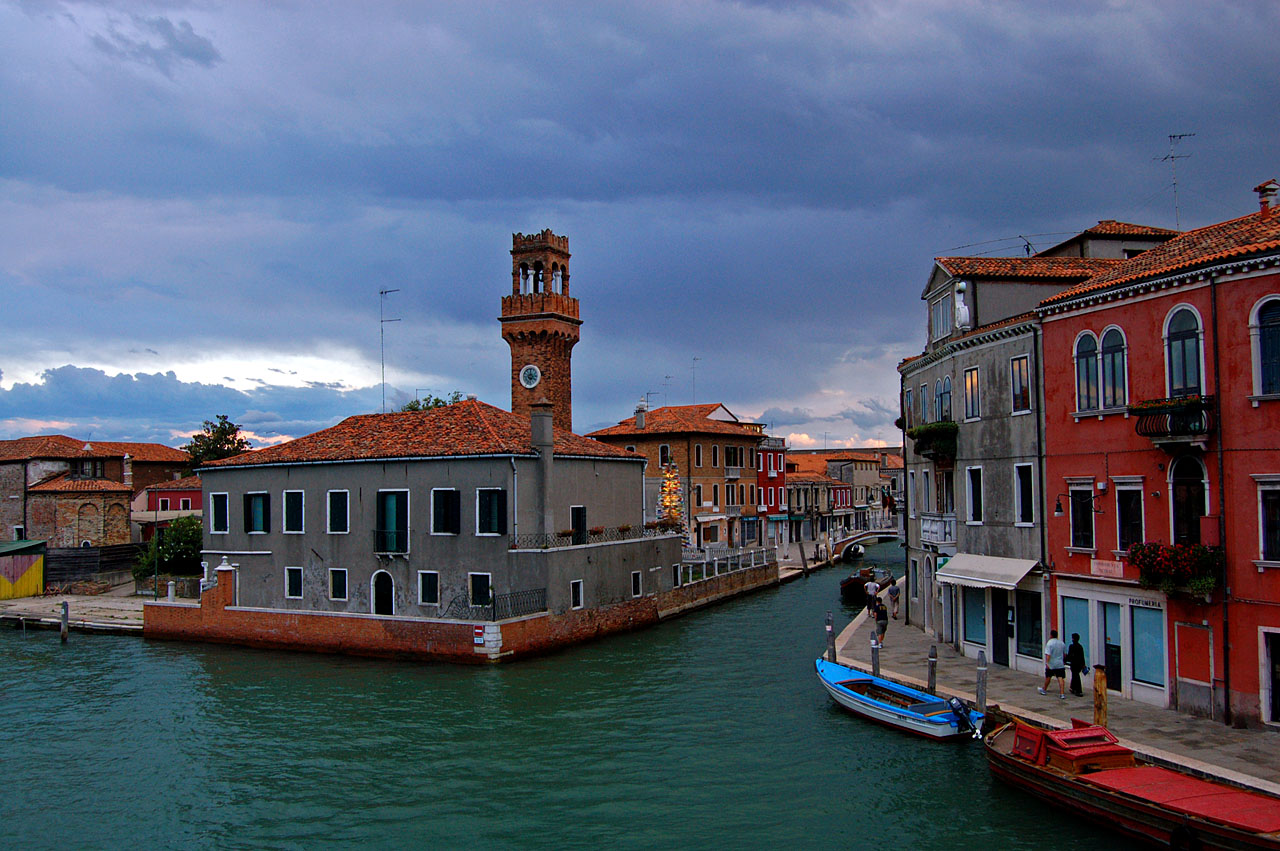
The mirrors in the Hall of Mirrors were made at the Manufacture Royale des Glaces de Miroirs, founded by Colbert in 1665.
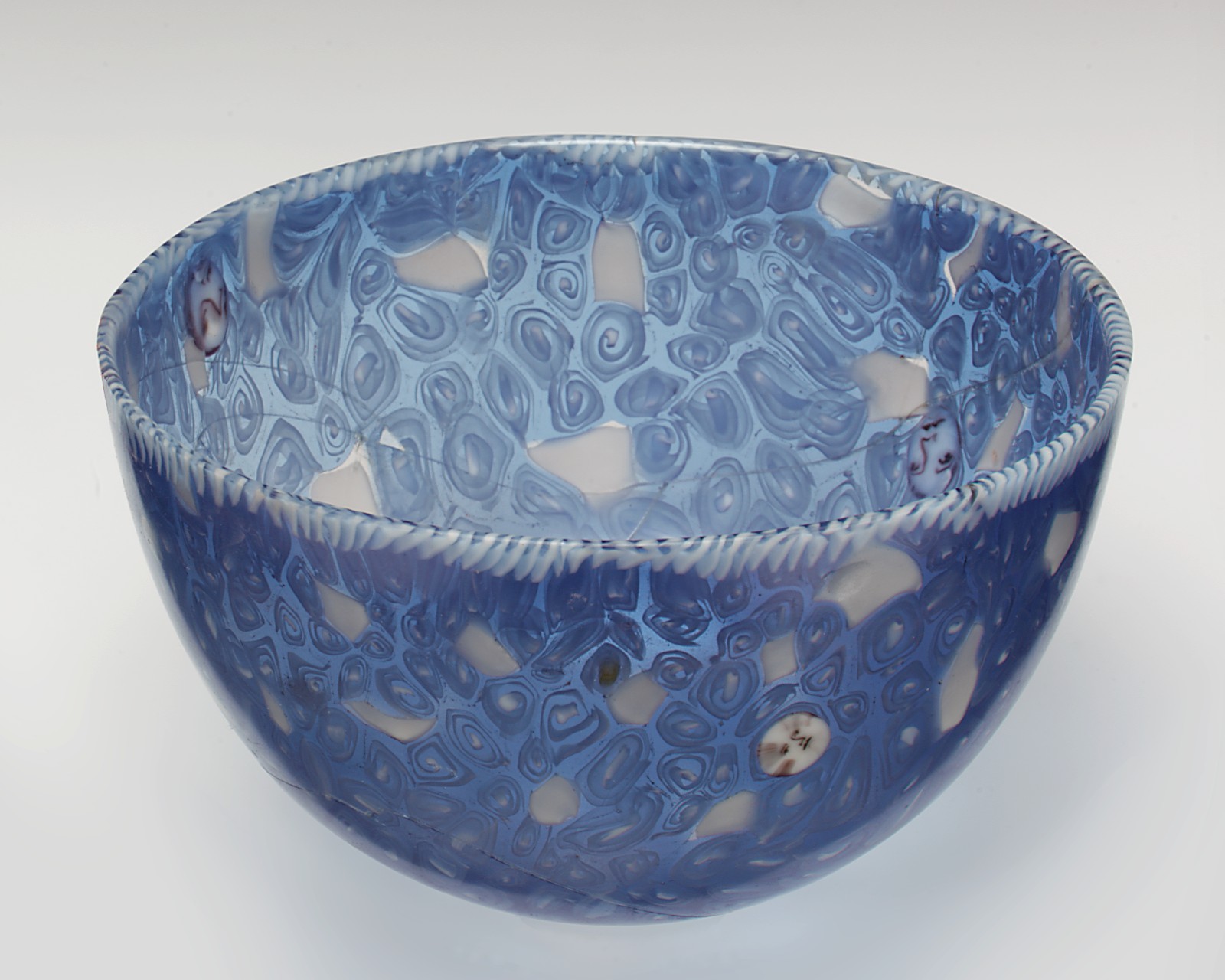
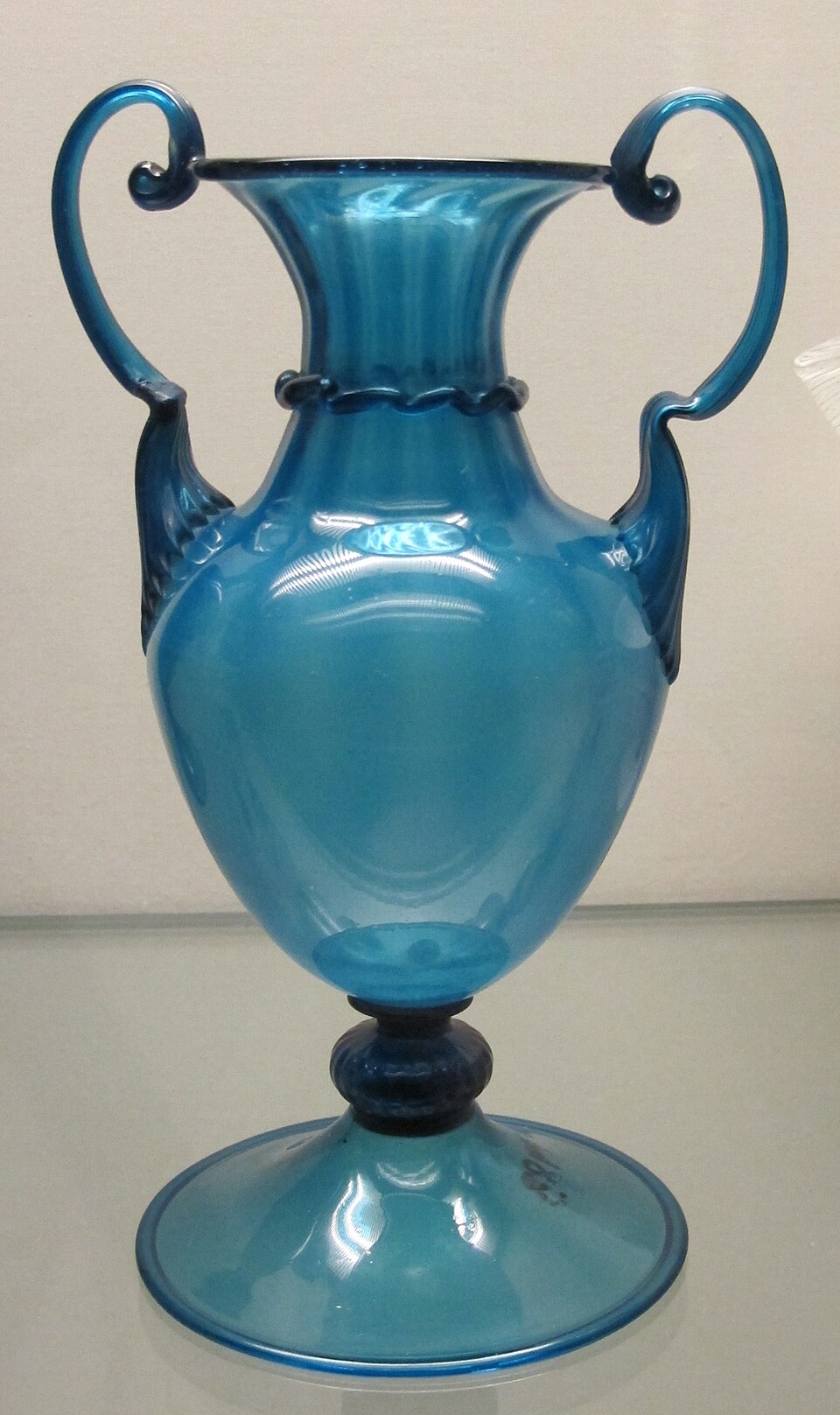
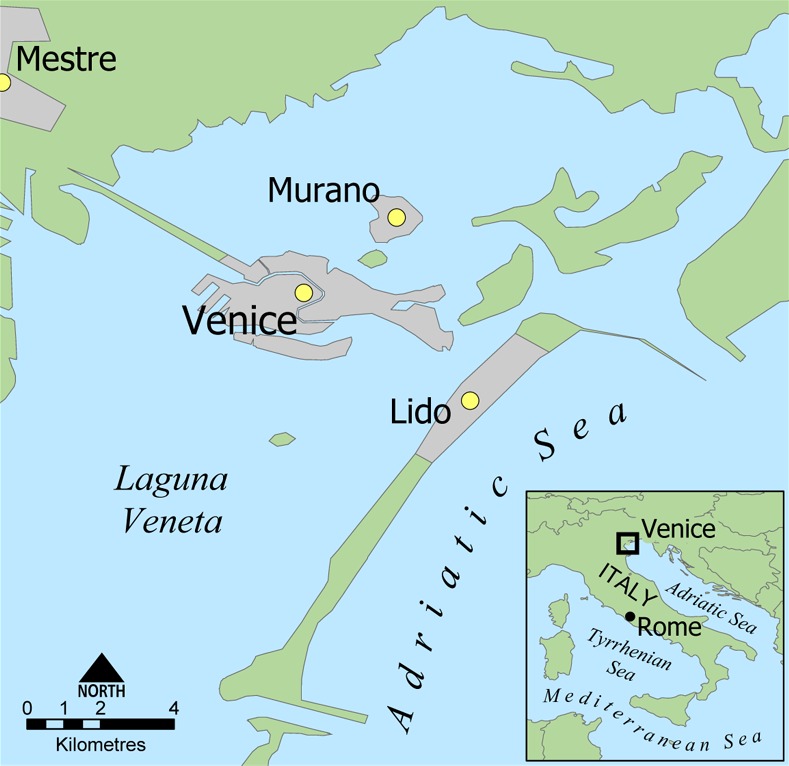
Until then, France had to import expensive Venetian mirrors and Venice had jealously guarded the secret of mirror-making for centuries - confining its glassmakers to the island of Murano and allegedly sending assassins after any who tried to leave.
Colbert managed to lure several Venetian master glassmakers to Paris, breaking the monopoly.
The process was extraordinarily complex. Glassmakers melted sand with potash and manganese at extremely high temperatures. The molten glass was then poured onto a flat copper table and rolled flat - a technique the French actually improved upon, producing larger, more uniform sheets than the Venetians had ever managed.
The back was then coated with a tin and mercury amalgam to create the reflective surface - a toxic process that slowly poisoned the workers who did it.
The Hall of Mirrors was partly a deliberate statement of French industrial prowess, demonstrating that France could now rival and surpass Venice at its own craft.
The mirrors also served a practical purpose: reflecting the light from the 350 windows opposite, flooding the gallery with light and creating the dazzling effect we still experience today.
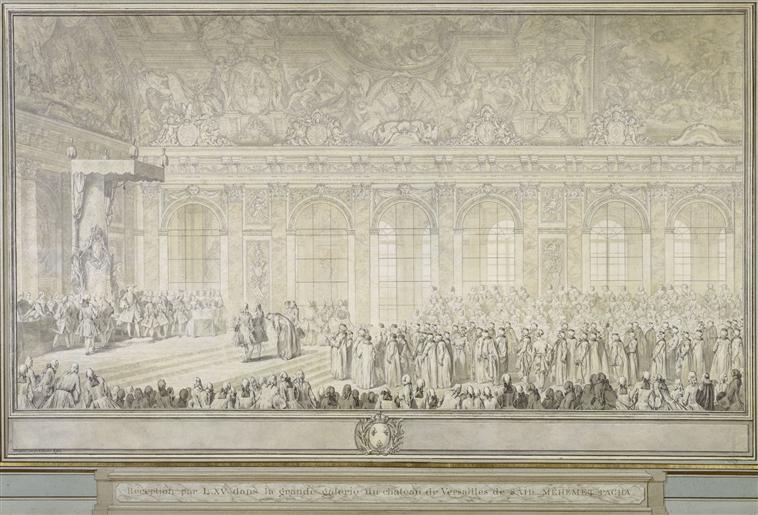
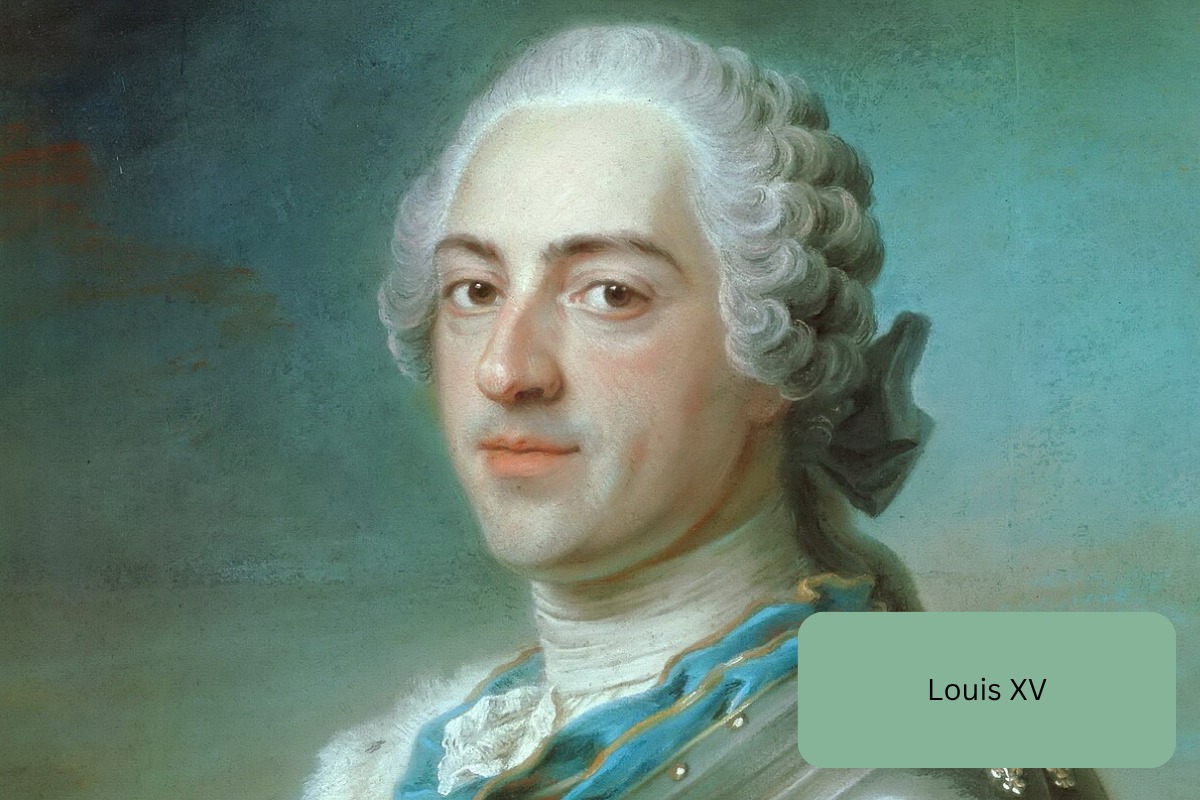
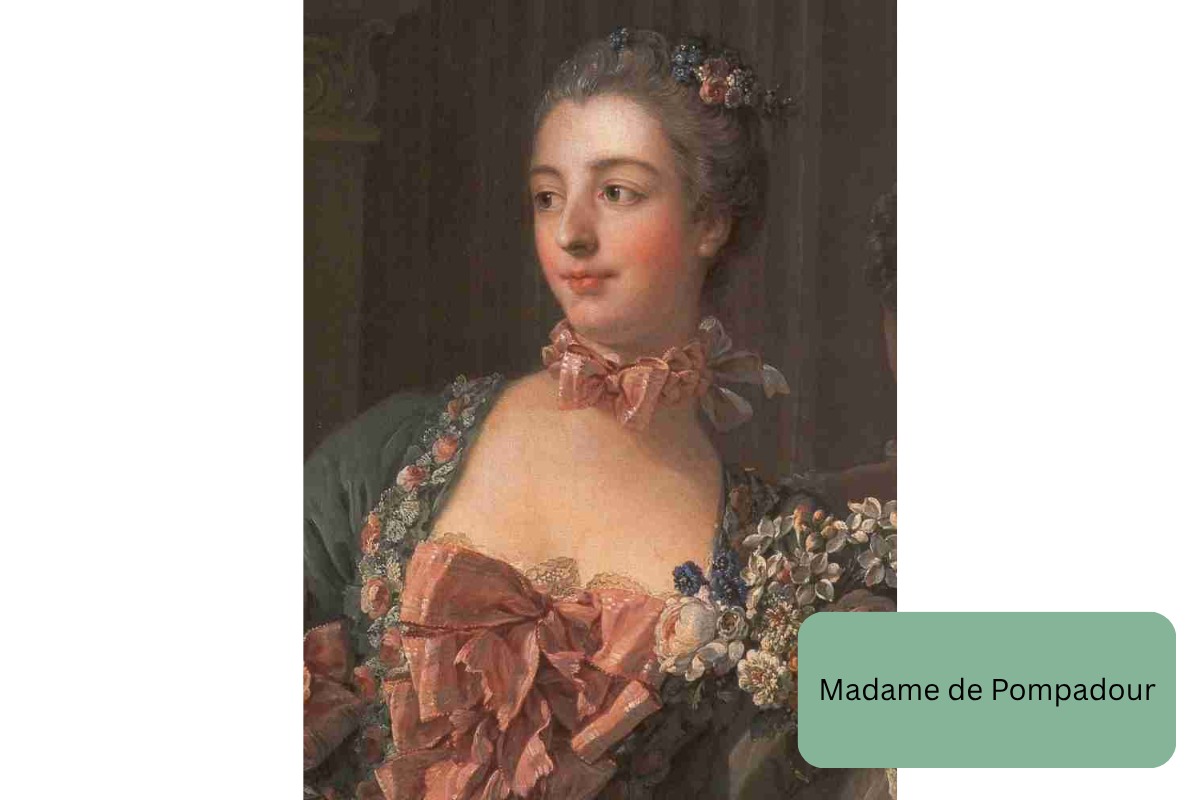
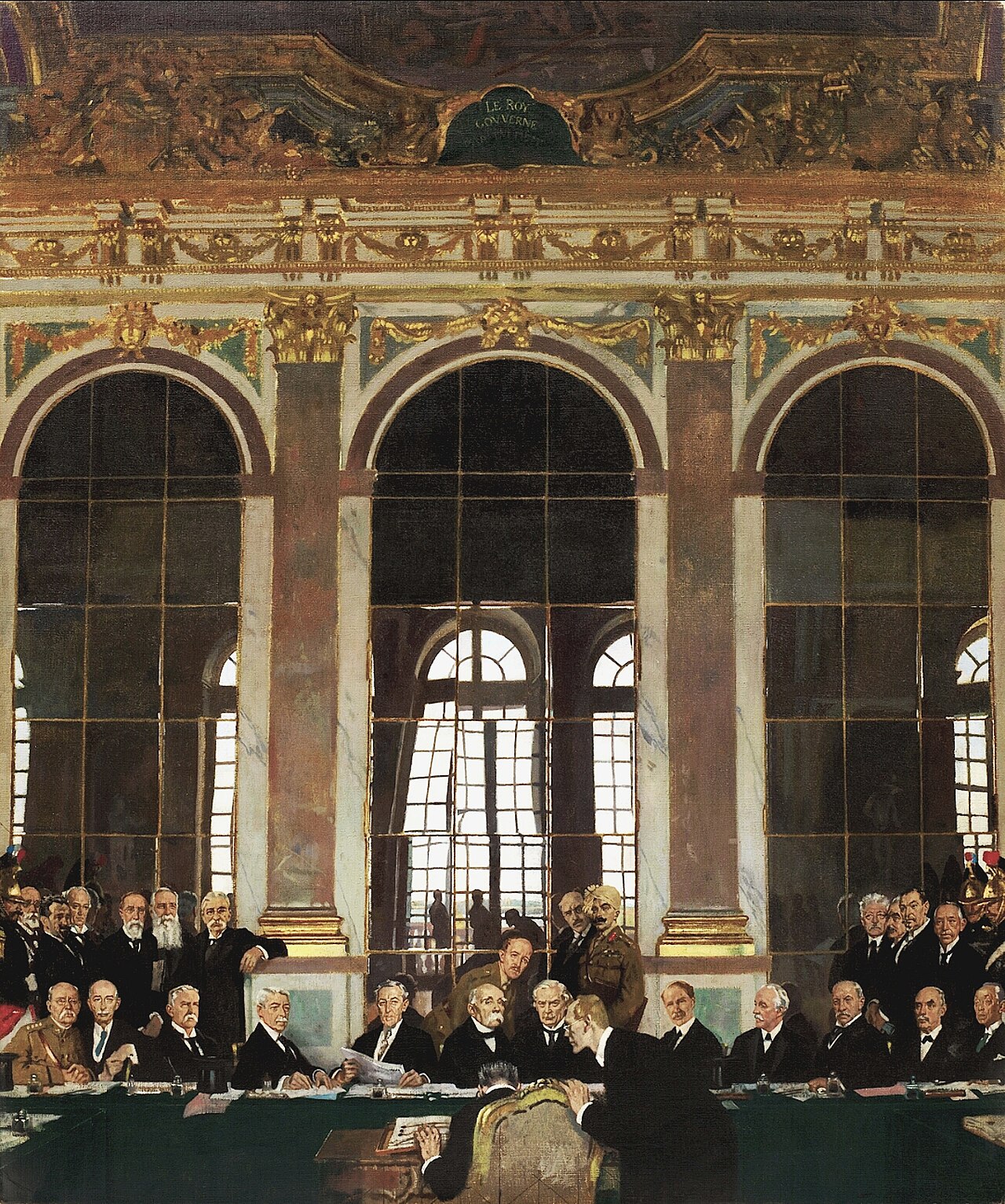
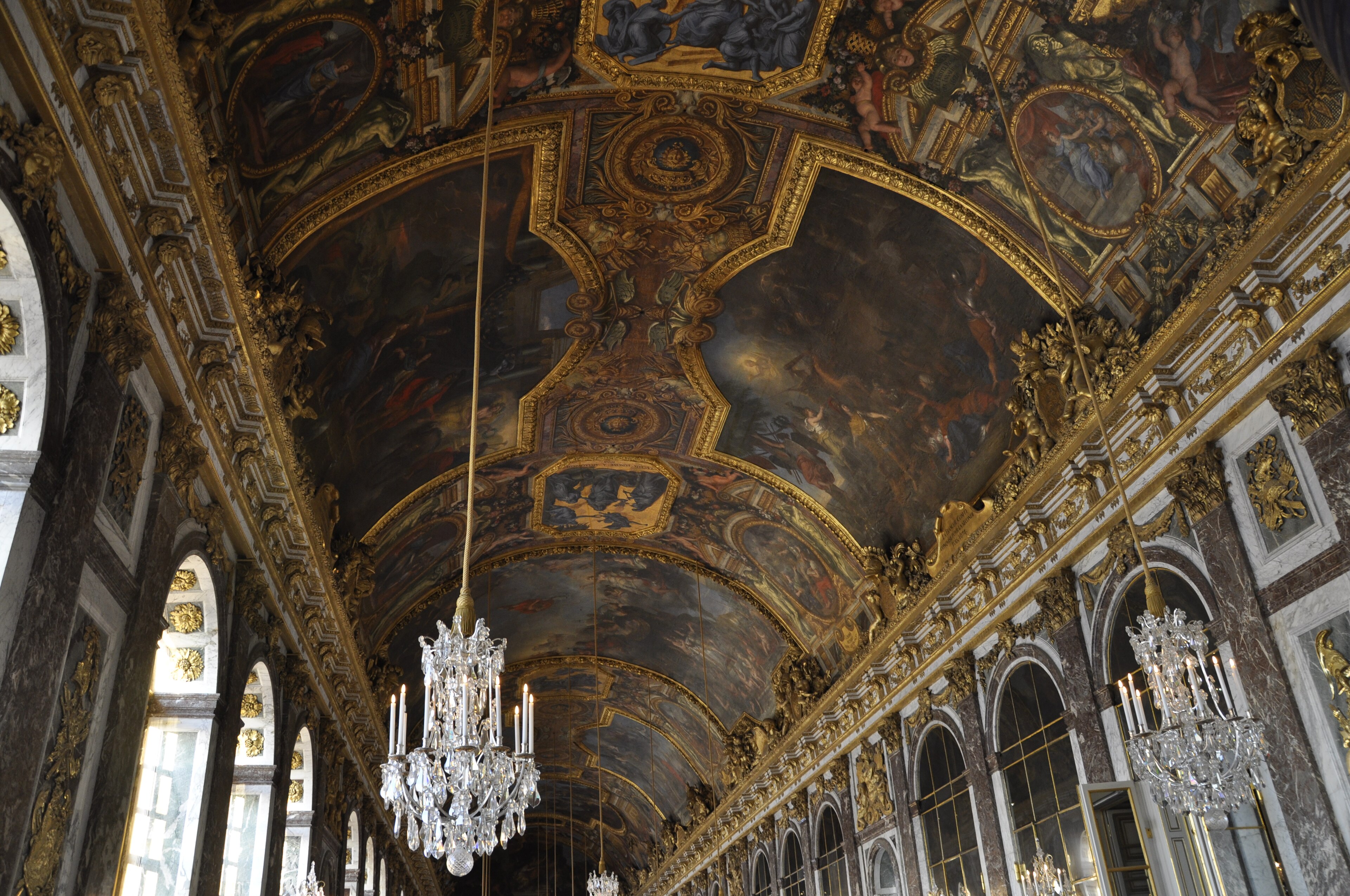
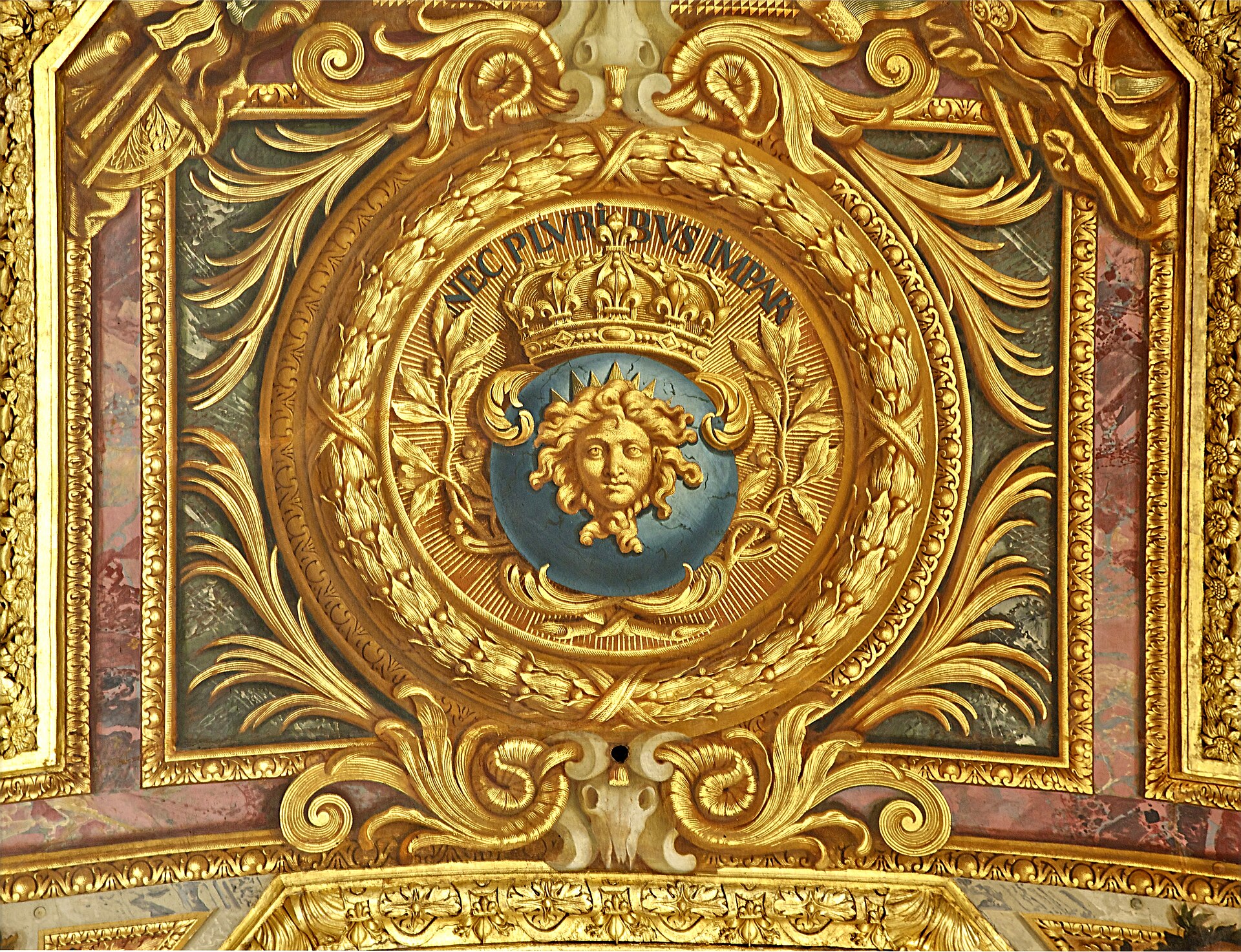
The ceiling paintings, like many artworks in Versailles, also aimed to promote the king's power - the central painting, for example, is called "Louis XIV governing by himself"!
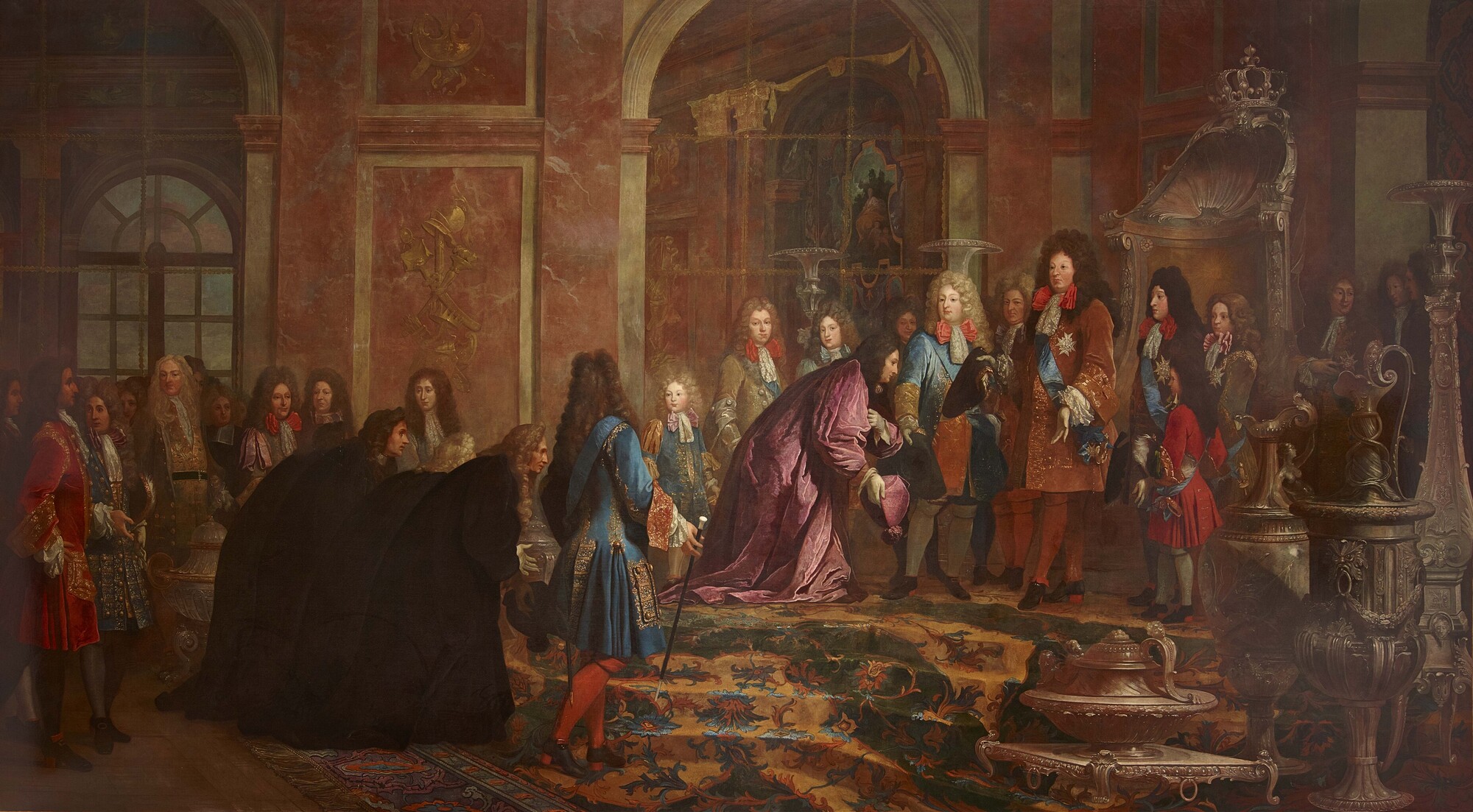
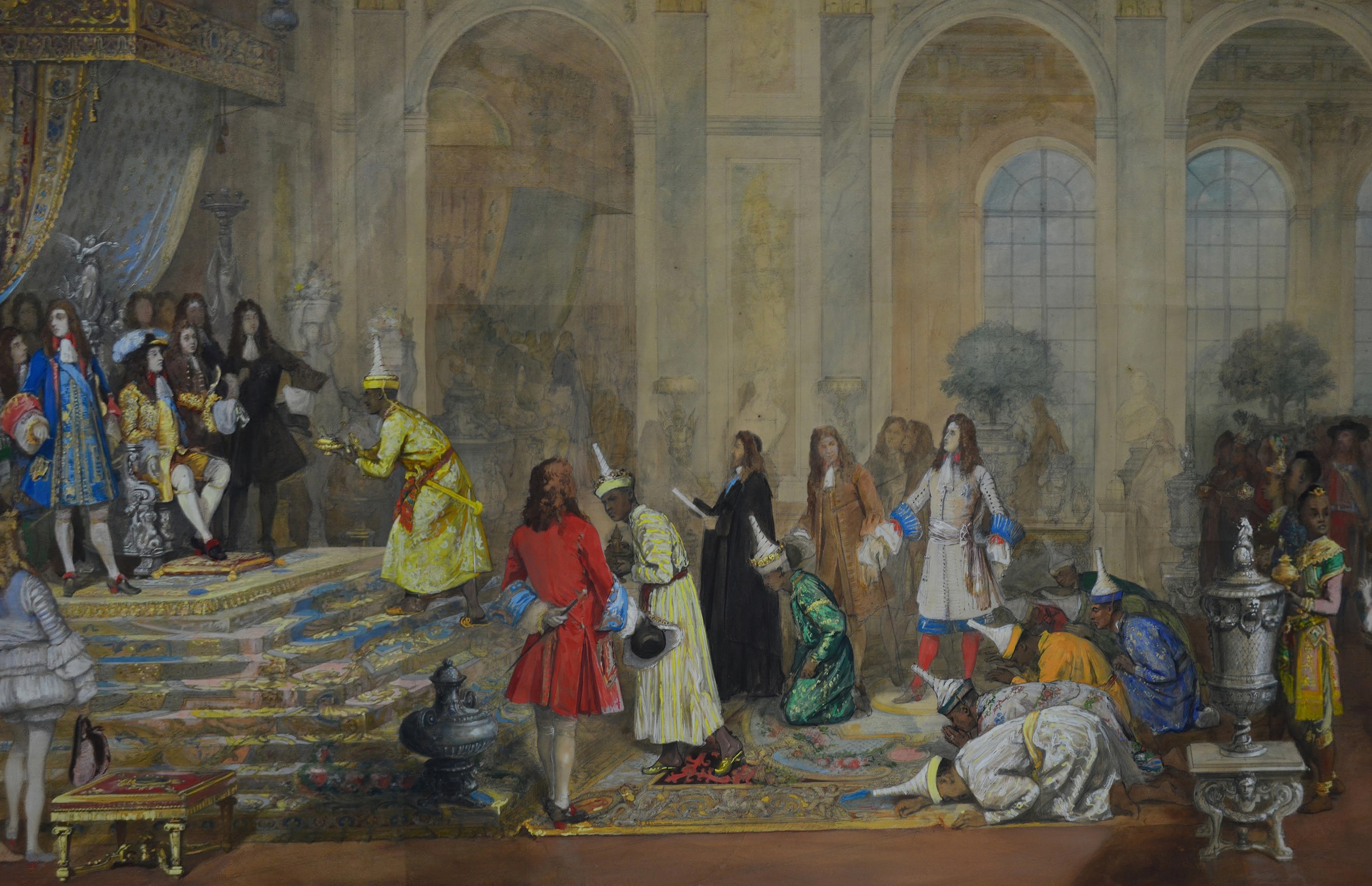
Louis XIV received important diplomatic envoys here.
Louis XIV met his famous mistress, the Marquise de Pompadour, at a masked ball here.
The gallery hosted Louis XVI and Marie-Antoinette's wedding reception.
It was also the backdrop for the famous signature of the Treaty of Versailles, which ended the First World War in 1919.
Comments
Loading comments...