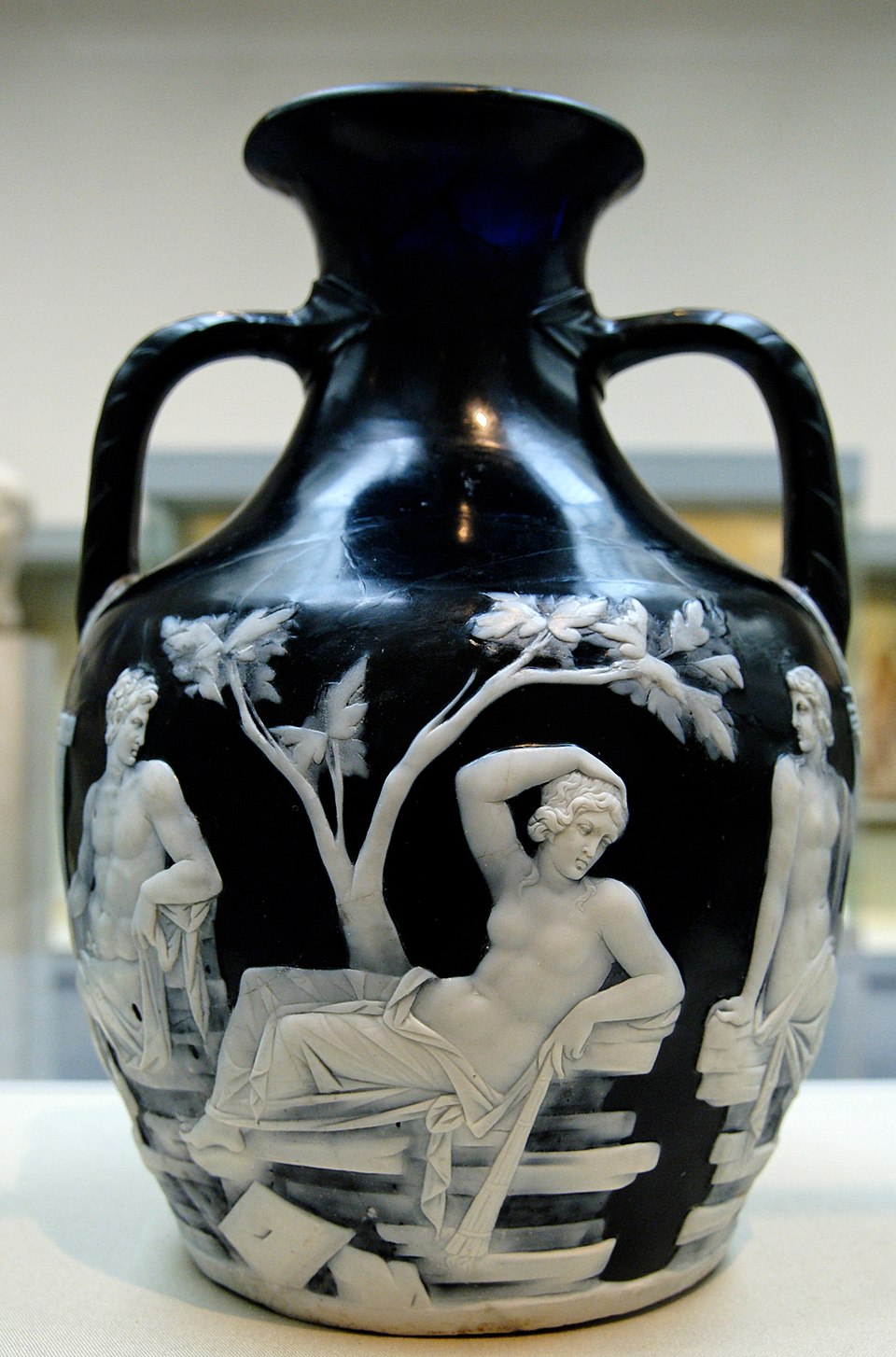


The Portland Vase is widely considered the most celebrated piece of glass in the ancient world.
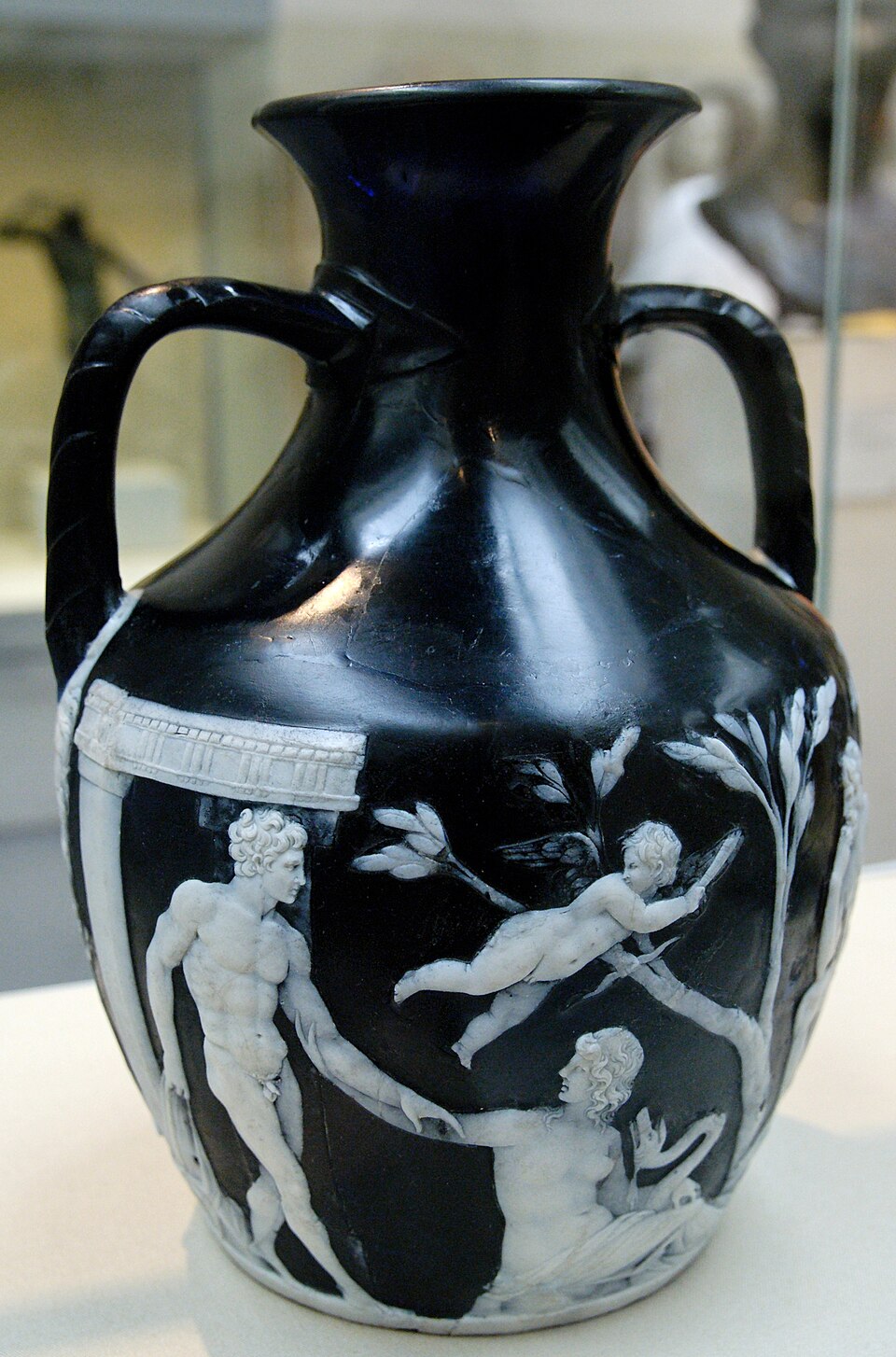
Roman, made around the time of Christ, it consists of two layers — dark cobalt blue beneath, with white figures carved in relief over the top through a technique that remains only partially understood, and has never been successfully replicated.
In 1790, the potter Josiah Wedgwood borrowed the vase from the Duchess of Portland and spent four years attempting to copy it in jasperware, making over 50 trials before he was satisfied.
The result became one of the most widely produced decorative objects in English history — chances are you have seen a Wedgwood copy without knowing it.
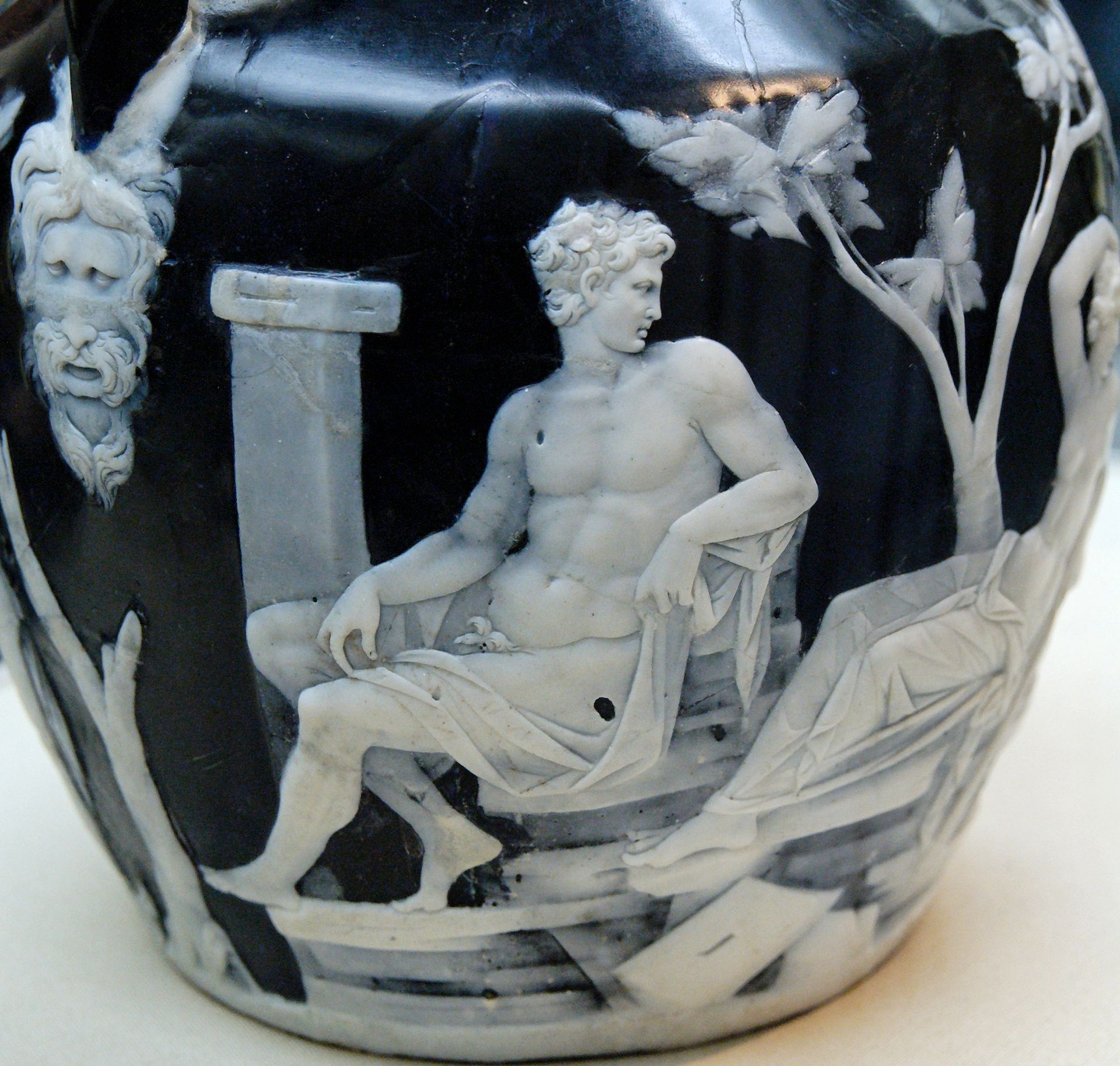
In 1845, a drunk visitor named William Mulcahy picked it up and smashed it against the case beside it, shattering it into 200 fragments.
Museum staff spent three months reassembling it — a process that has had to be repeated twice since.
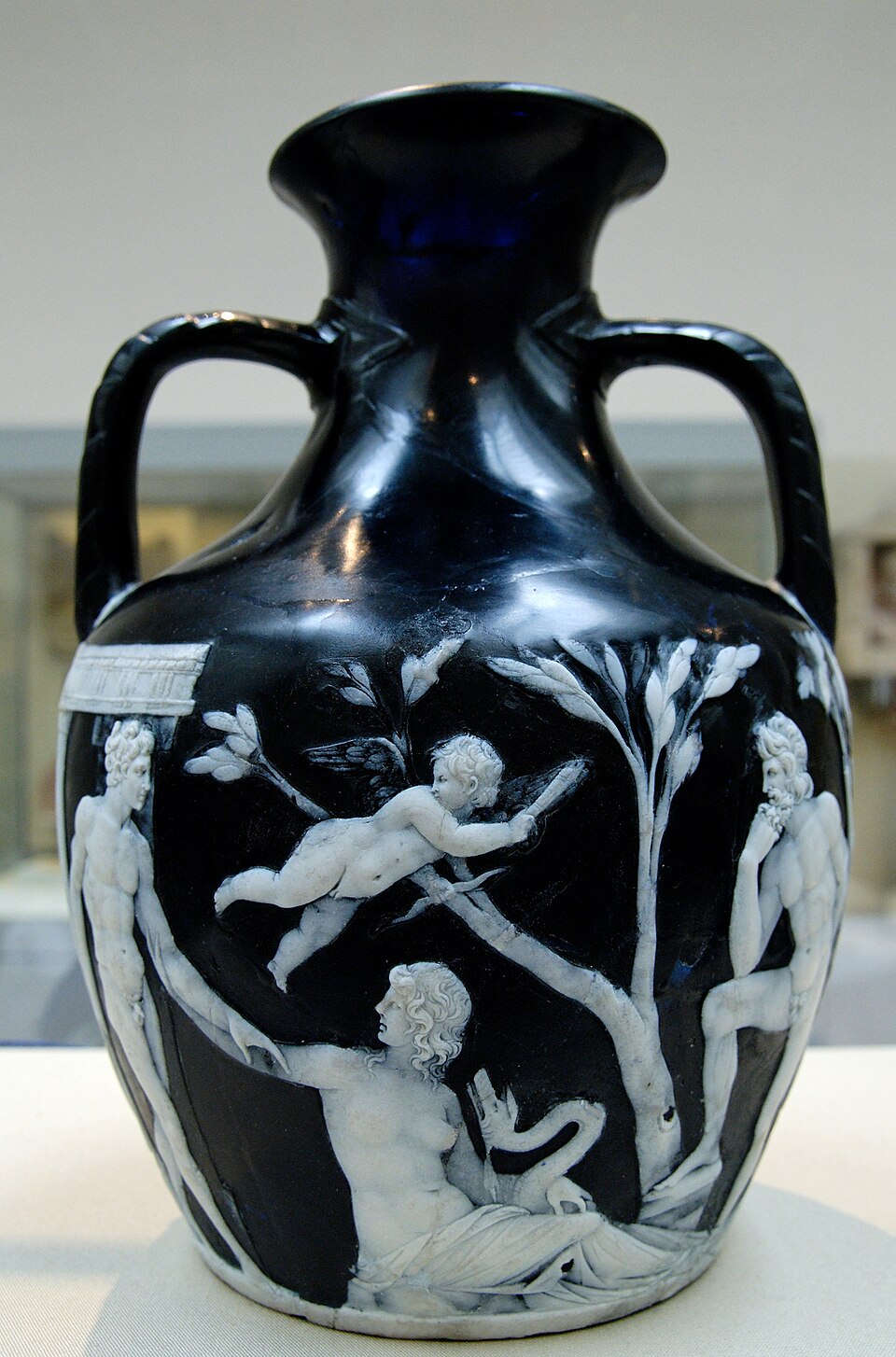
The scenes on the vase — figures reclining under trees, a sea-serpent, a woman who may be a goddess — have never been fully explained.
Scholars have proposed the myth of Peleus and Thetis, the story of Theseus, and various allegories of love and mortality.
Whatever the Romans intended, they took the meaning with them.