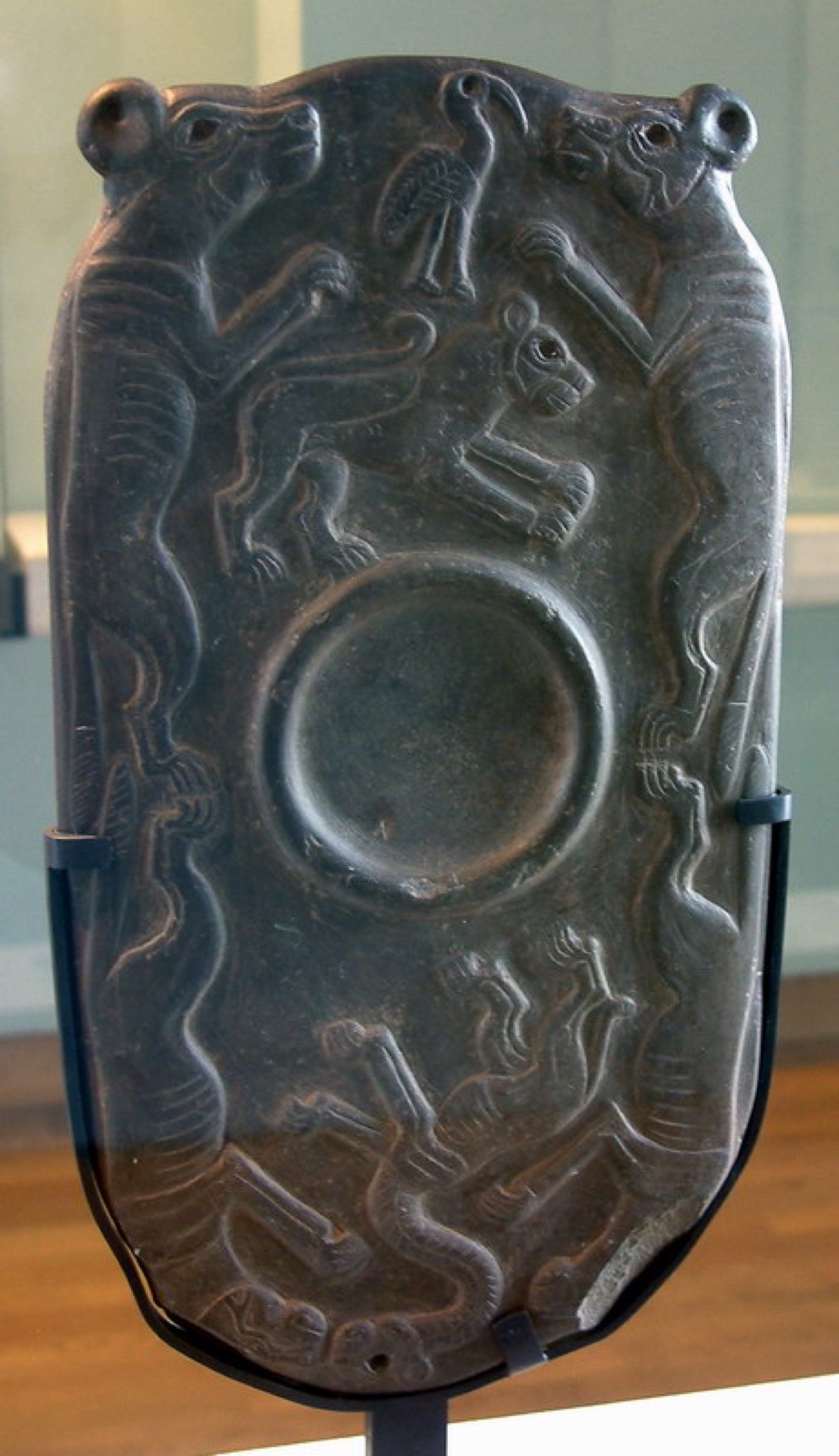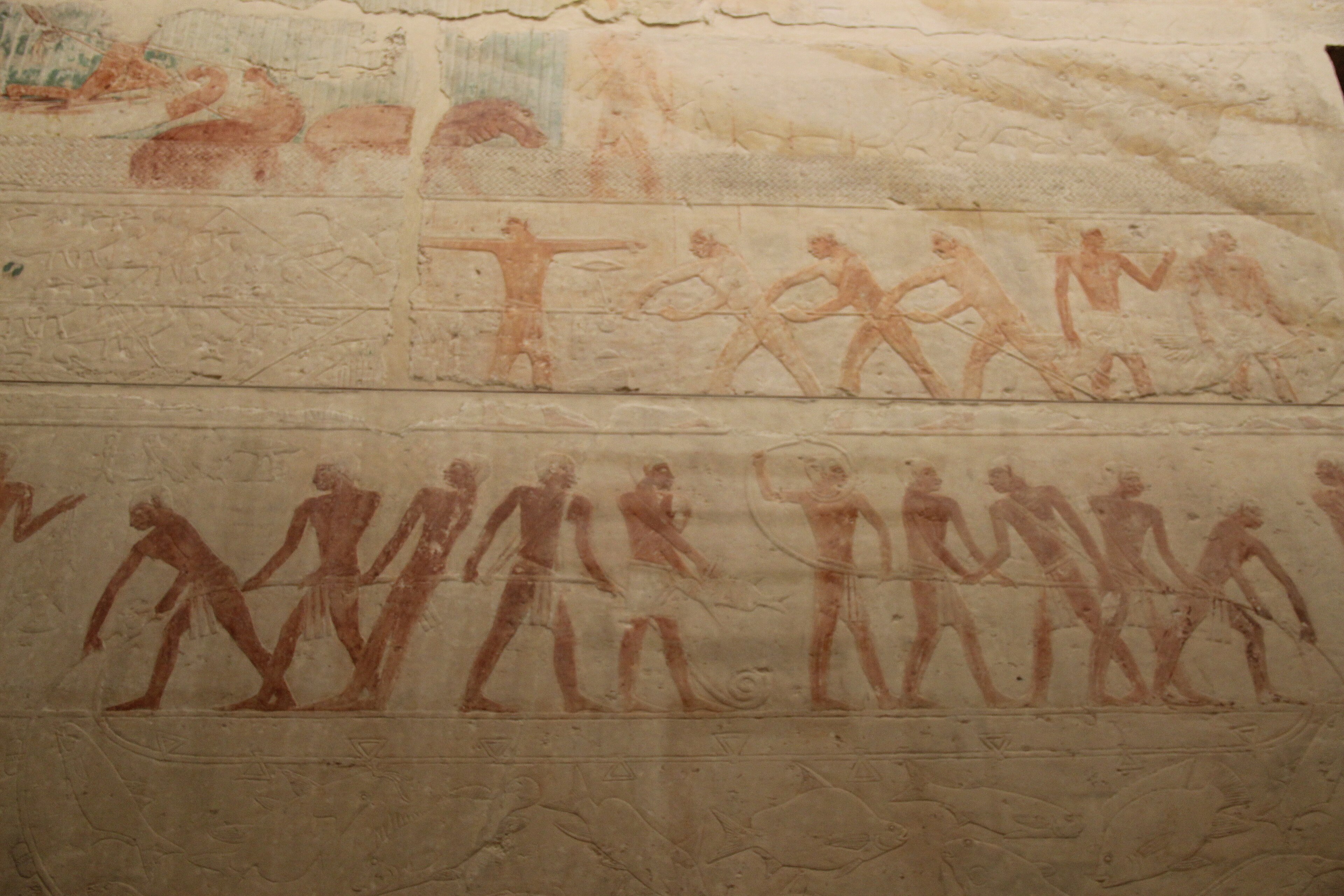


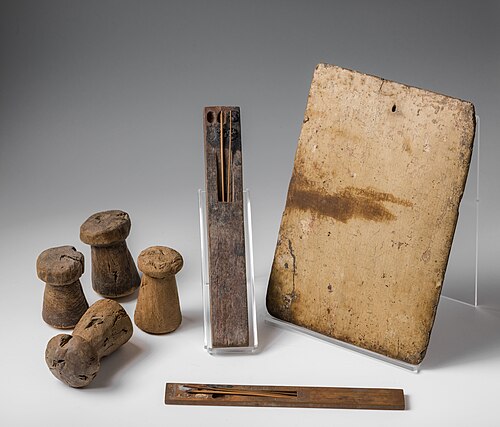
In the Old Kingdom, only about one percent of the population are believed to have been able to read or write.
Scribes sat near the very top of that world.
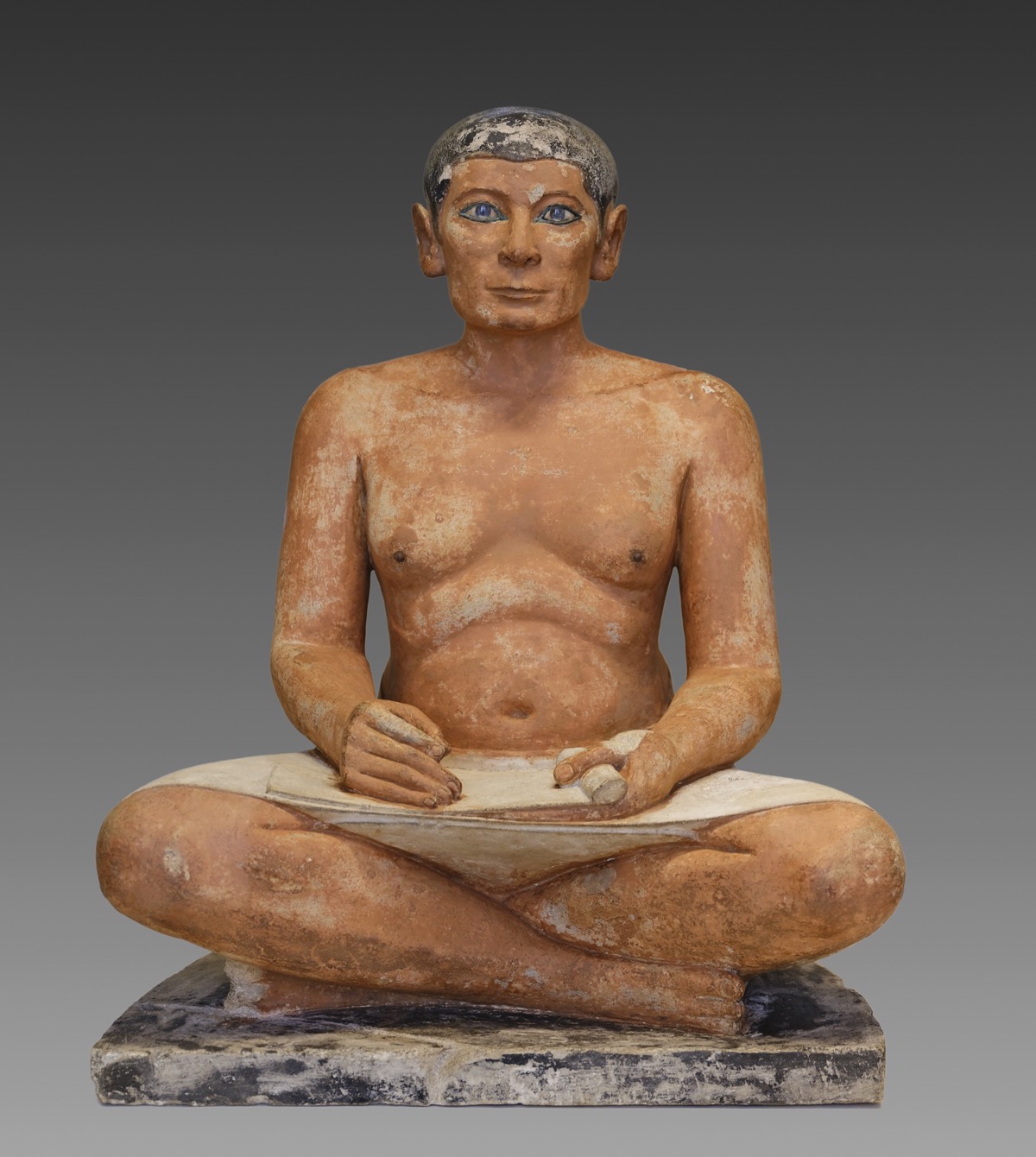
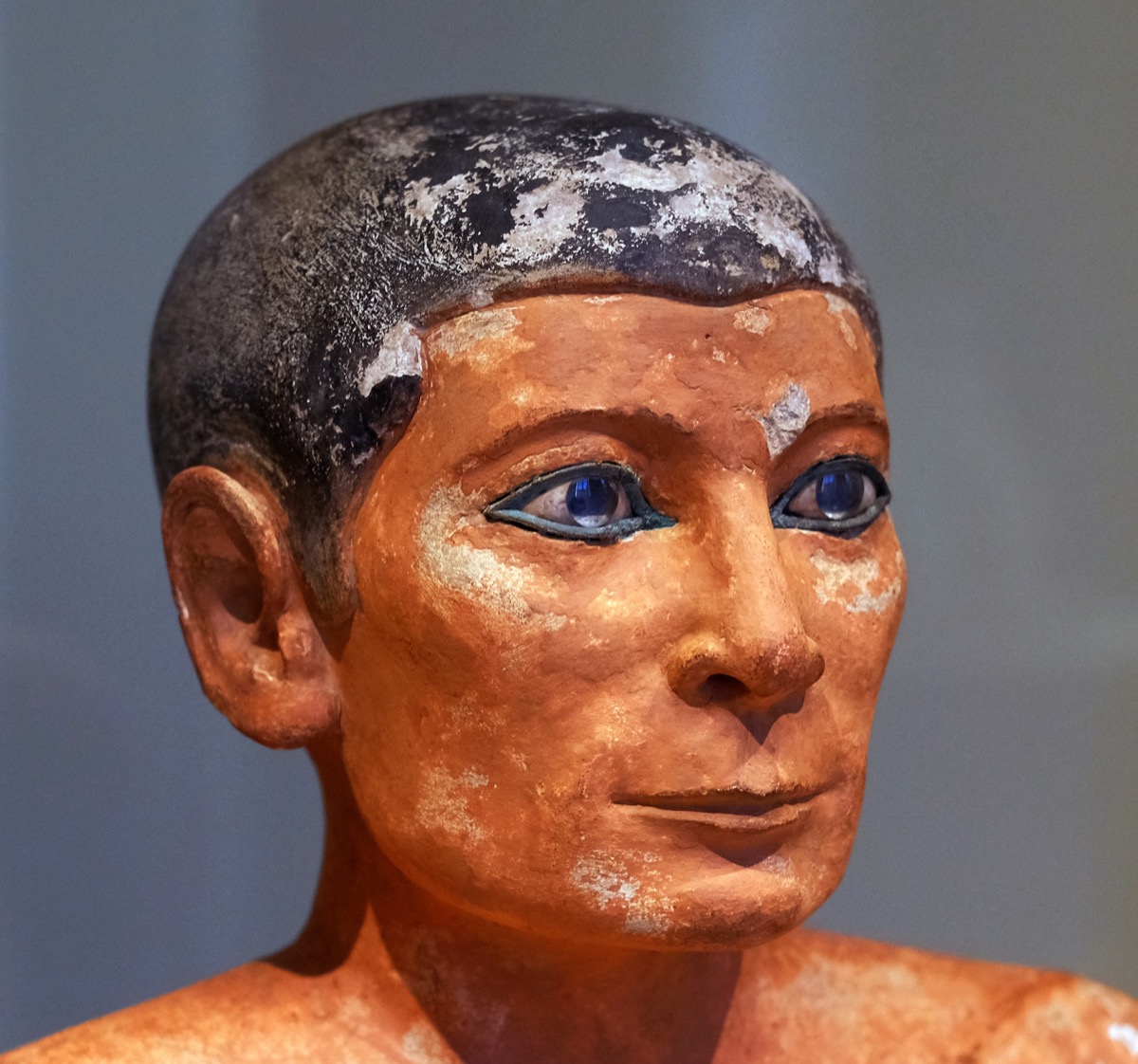
Like the Mona Lisa, the Seated Scribe is very famous for his stare. His eyes are not painted — but inlaid crystal over copper, with a tiny pin at each iris to catch the light.
Walk slowly around the case and he will follow you.
He's been doing it for four and a half thousand years.
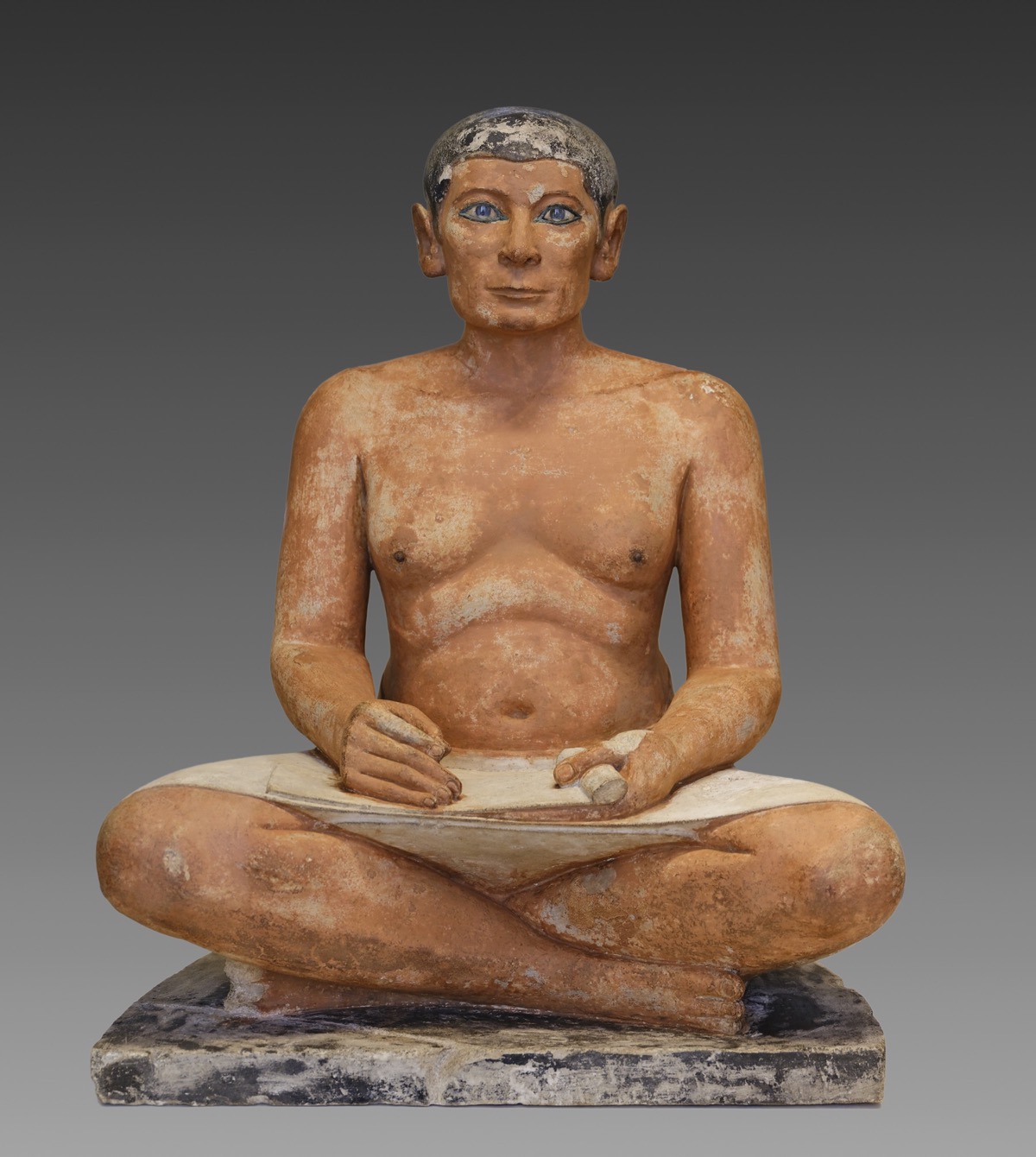
He sits cross-legged, scroll across his lap, right hand raised where a brush once rested.
We don't know his name but the carving's quality suggests someone of the highest status, possibly a royal son.
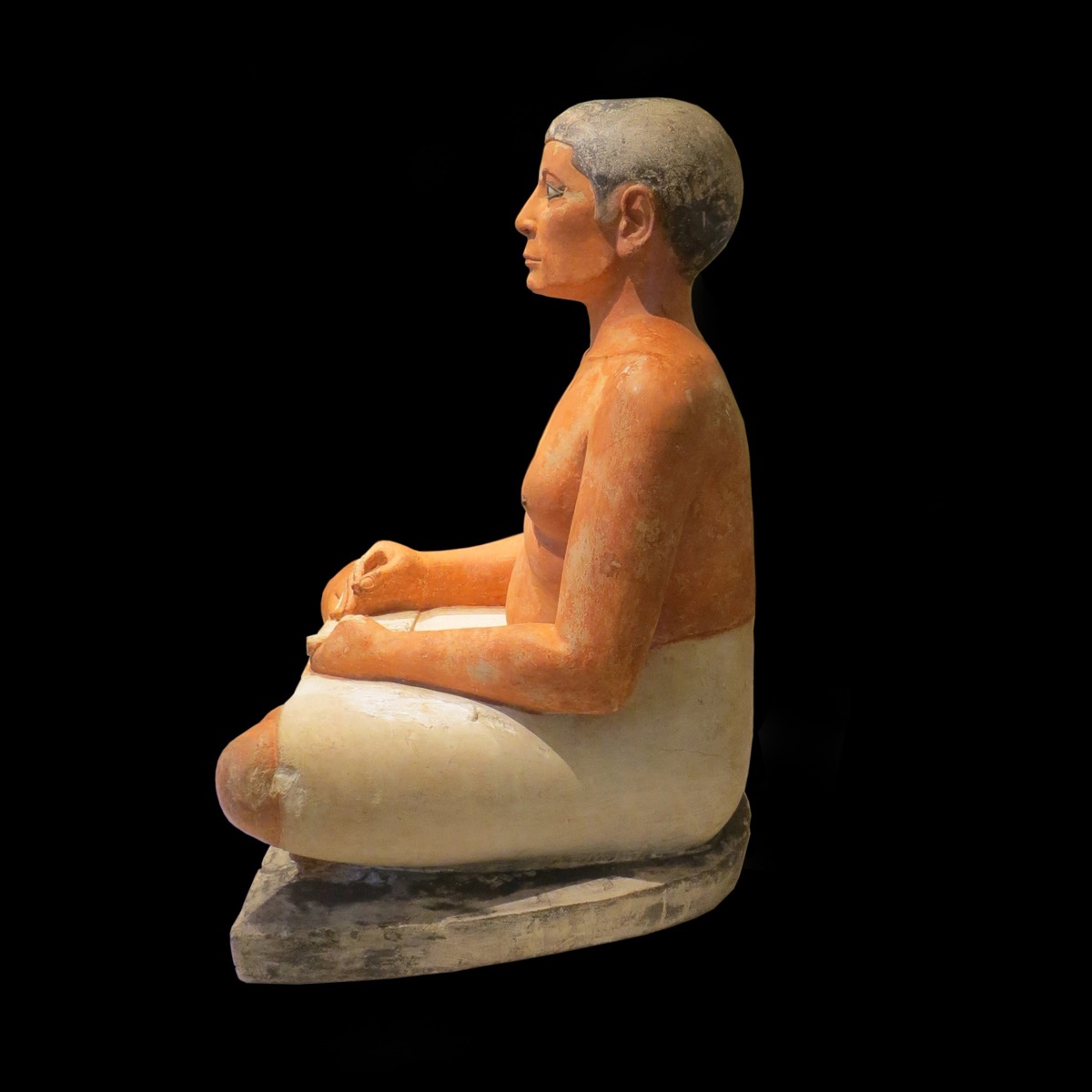
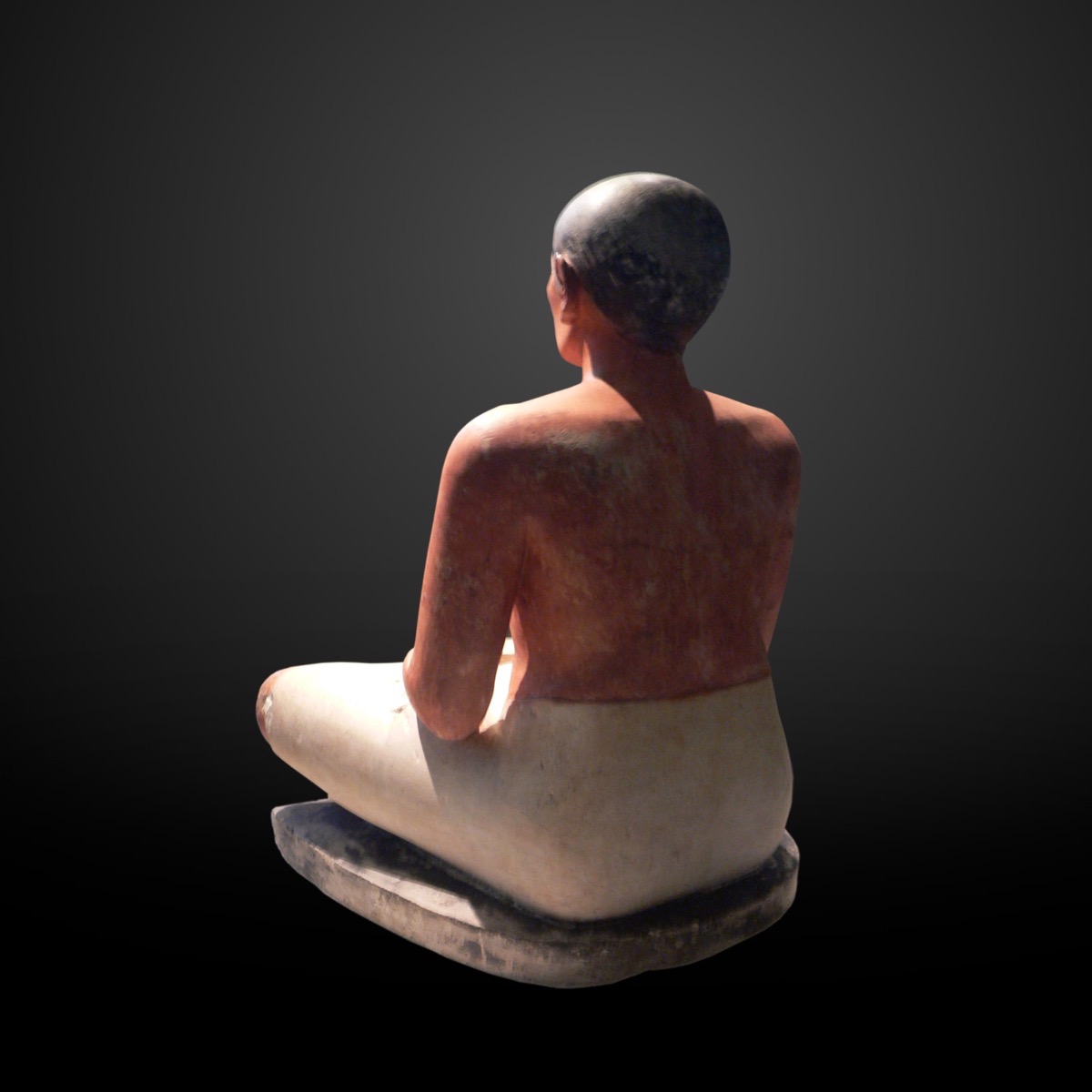
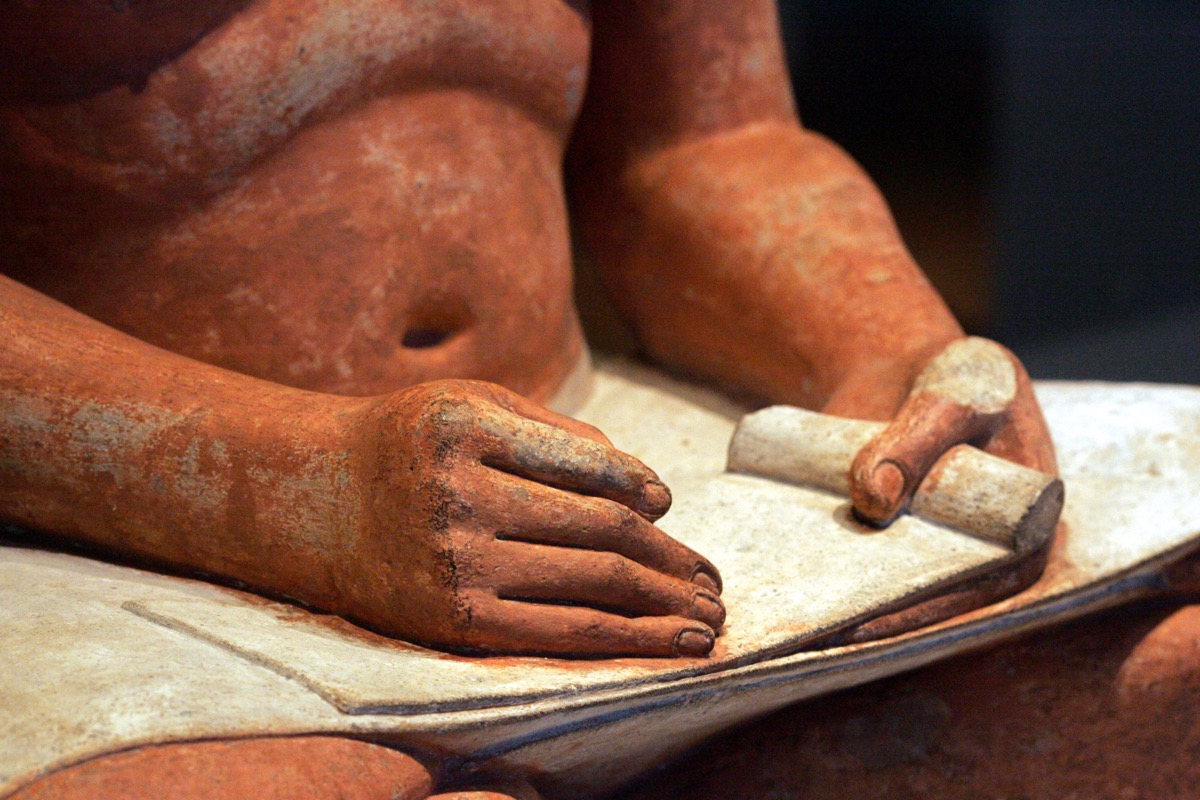
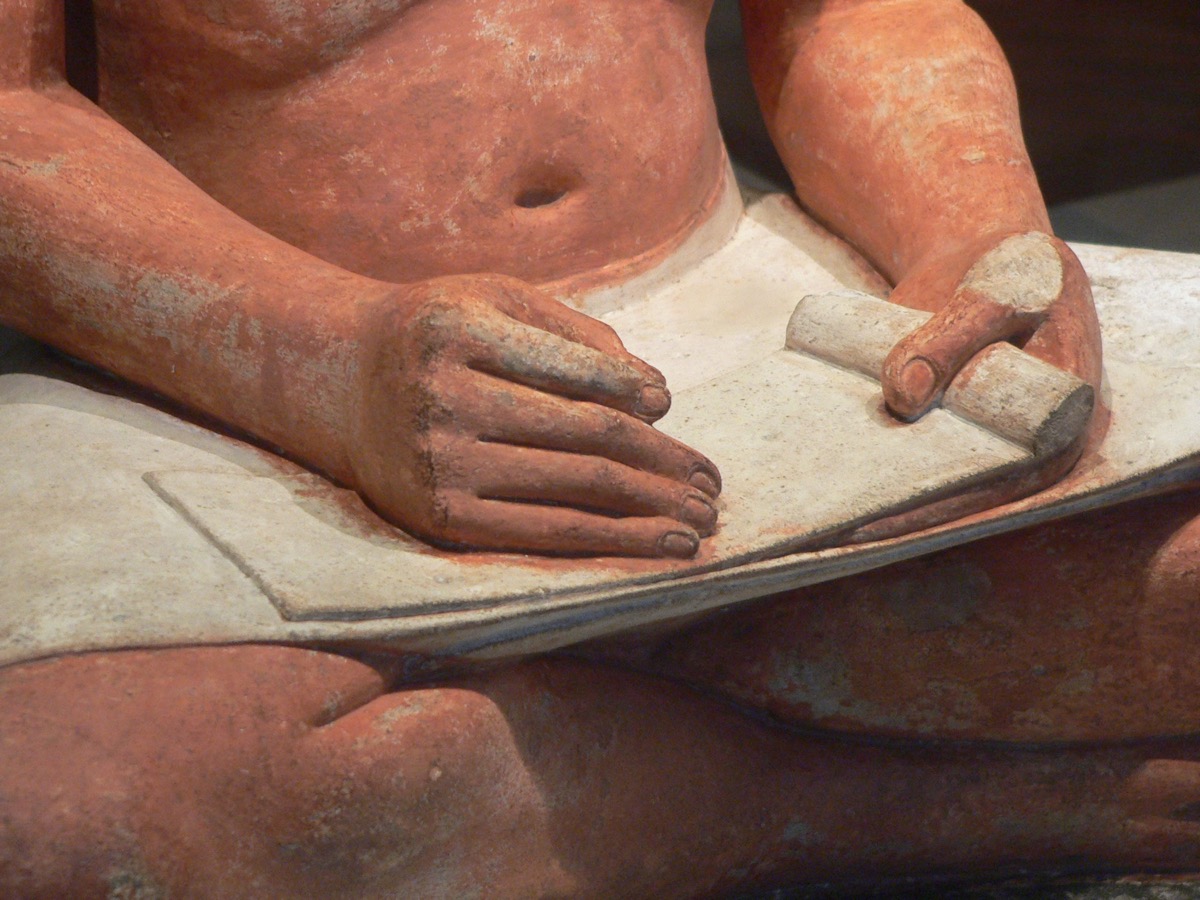
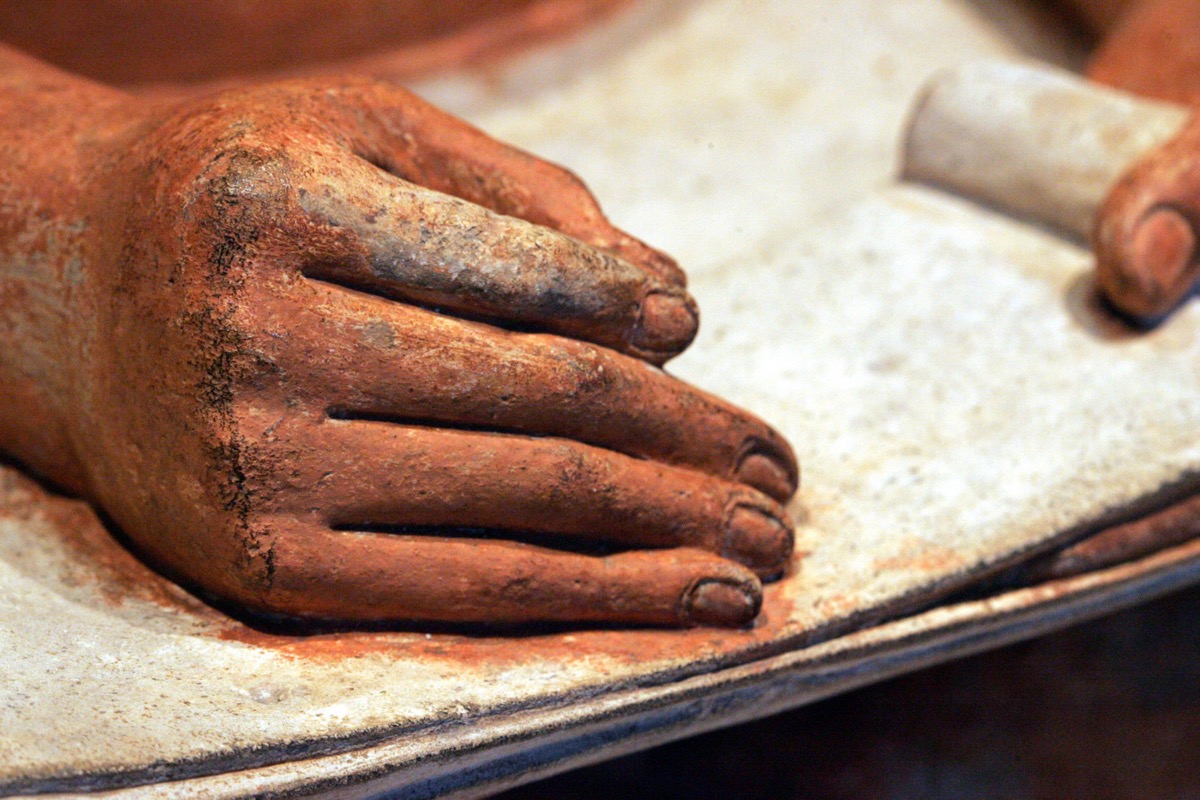
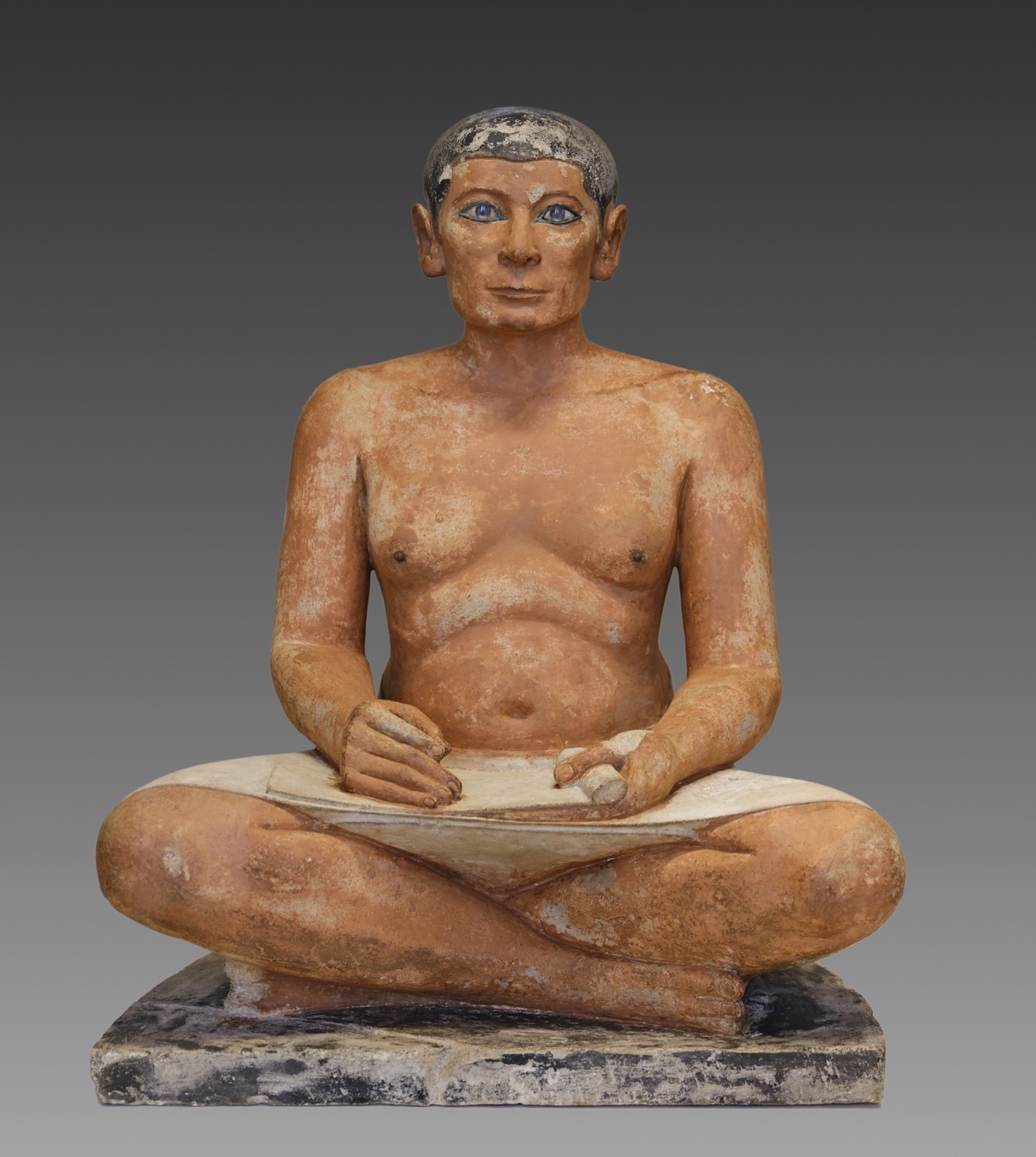
Found at Saqqara, he was acquired by the Louvre in 1854 and has almost never left this room since — apart from a single loan to Louvre-Lens in 2022 - which was treated as a major event.
The French public reacted to the scribe's temporary absence as if losing an old friend.
Few objects in the Louvre have this kind of hold on people.