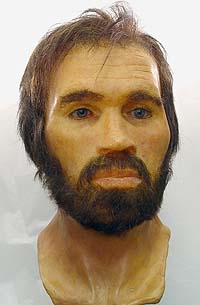


In 1984, peat cutters in a Cheshire bog pulled up the body of a man dead for roughly 2,000 years.
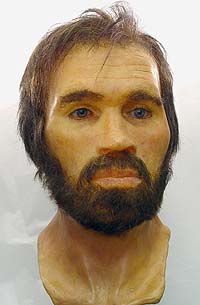
He was almost perfectly preserved by the acidic oxygen-free conditions of the peat - his skin, hair and even his last meal - burnt flatbread cooked over a fire and partly digested - intact!
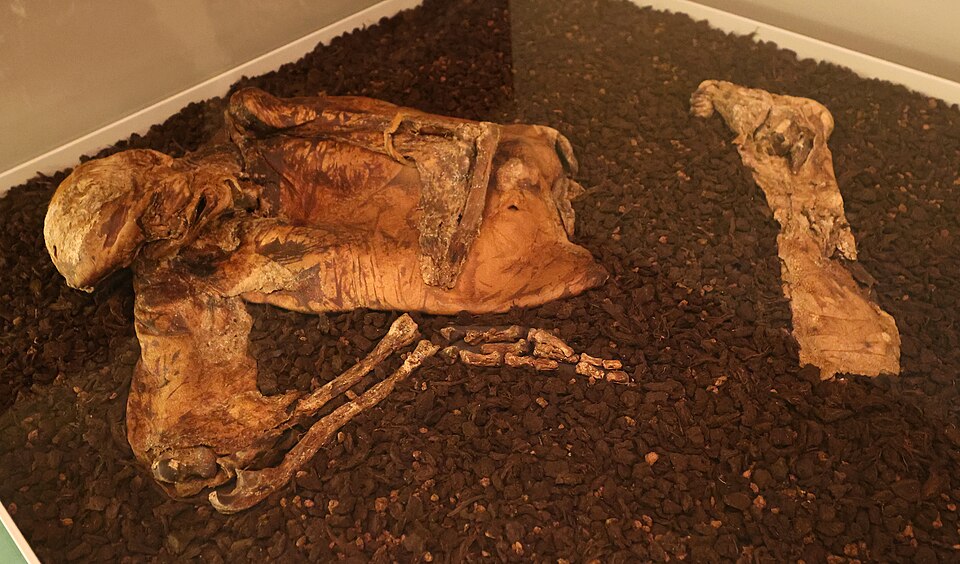
He is the best-preserved bog body ever found in Britain.
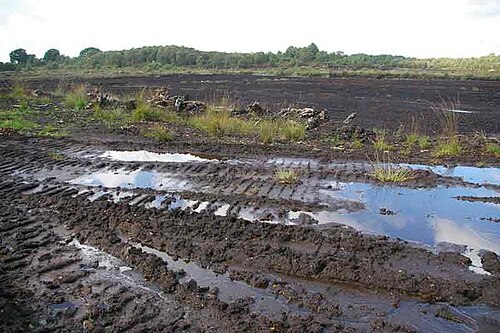
Another aspect was striking - he did not die peacefully. Indeed the evidence shows that he was struck twice on the head with a blunt object, strangled with a sinew cord, and then had his throat cut - what archaeologists call the triple death. He was then placed face down in the bog - still breathing, as bog water was found in his lungs.
He was likely around 25-30 years old.
His trimmed fingernails and well-nourished body suggest that this was not the execution of a criminal.
He was probably a man of some status, chosen or volunteering to die.
Since the year of death is estimated to be around 60 AD, a time when the Romans were launching a major new offensive against Britain, it has been hypothesised that he could have been a ritual sacrifice to invoke divine protection.
This could fit in with the fact that mistletoe pollen was also found in his stomach - a sacred plant, whose symbolism was important in druidic belief. Bogs were also liminal spaces in Celtic belief - neither dry or wet, neither this world or the next.
Fun fact : scientists have come to call the body Pete Marsh - a pun on the description peat marsh.