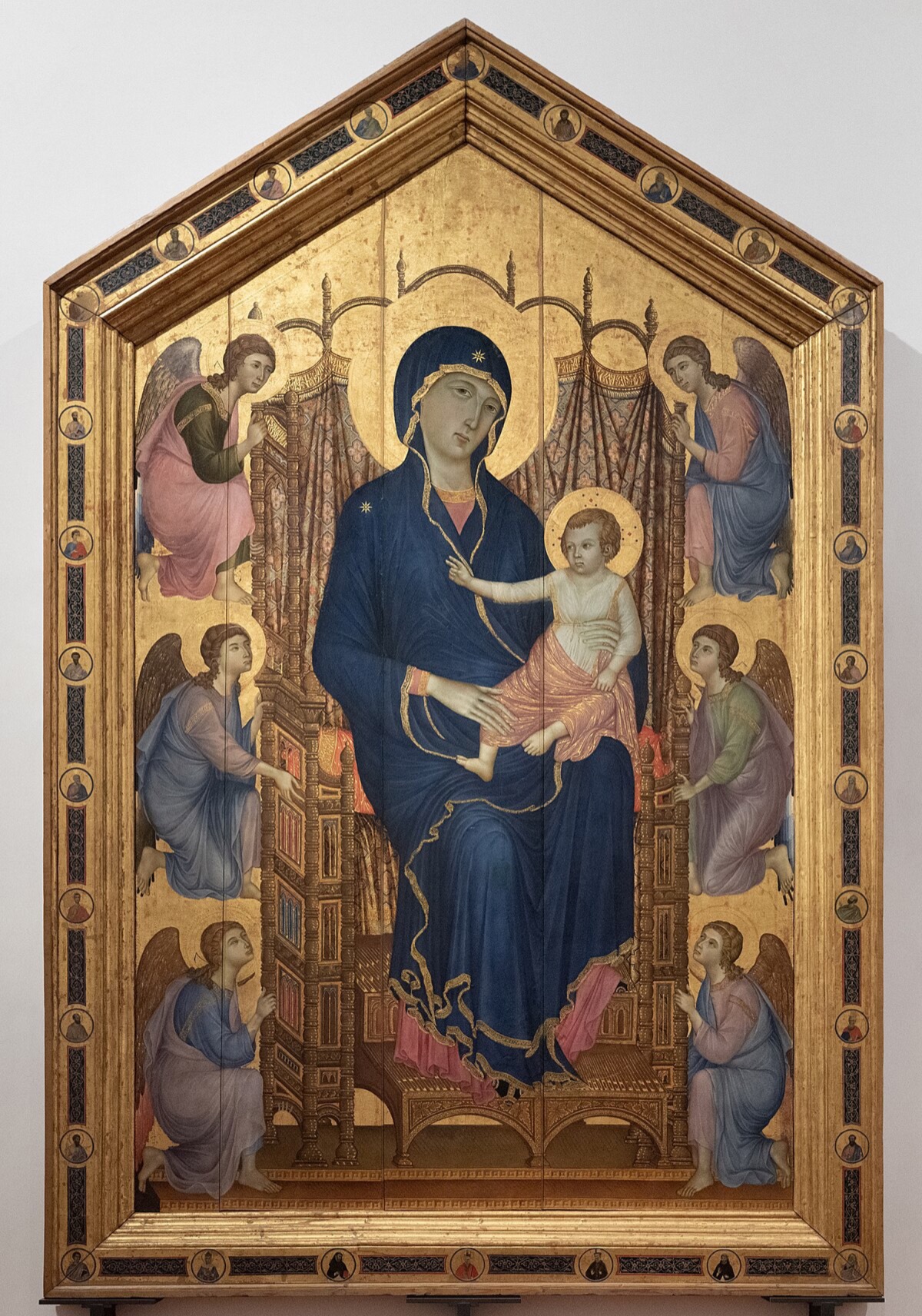


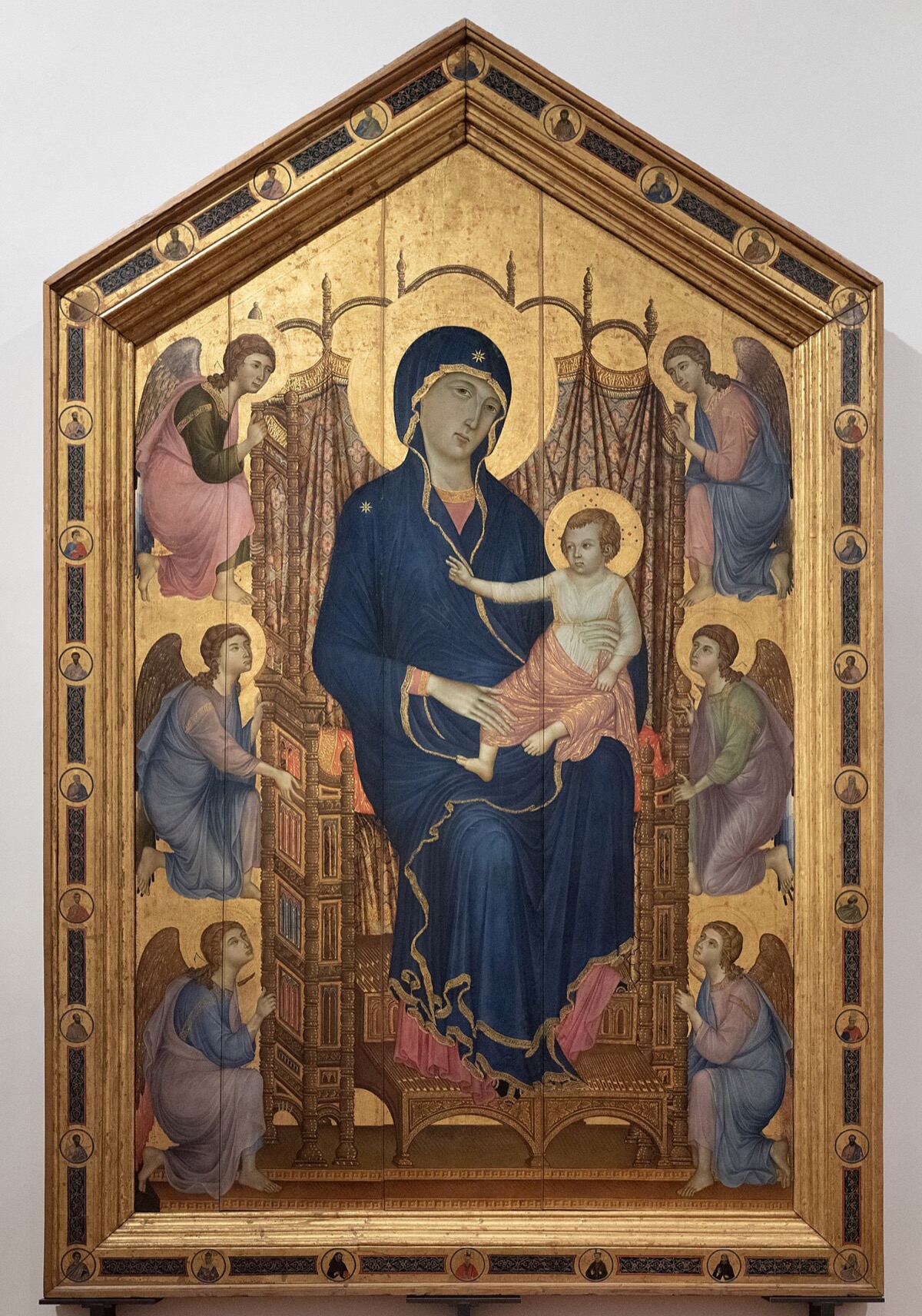
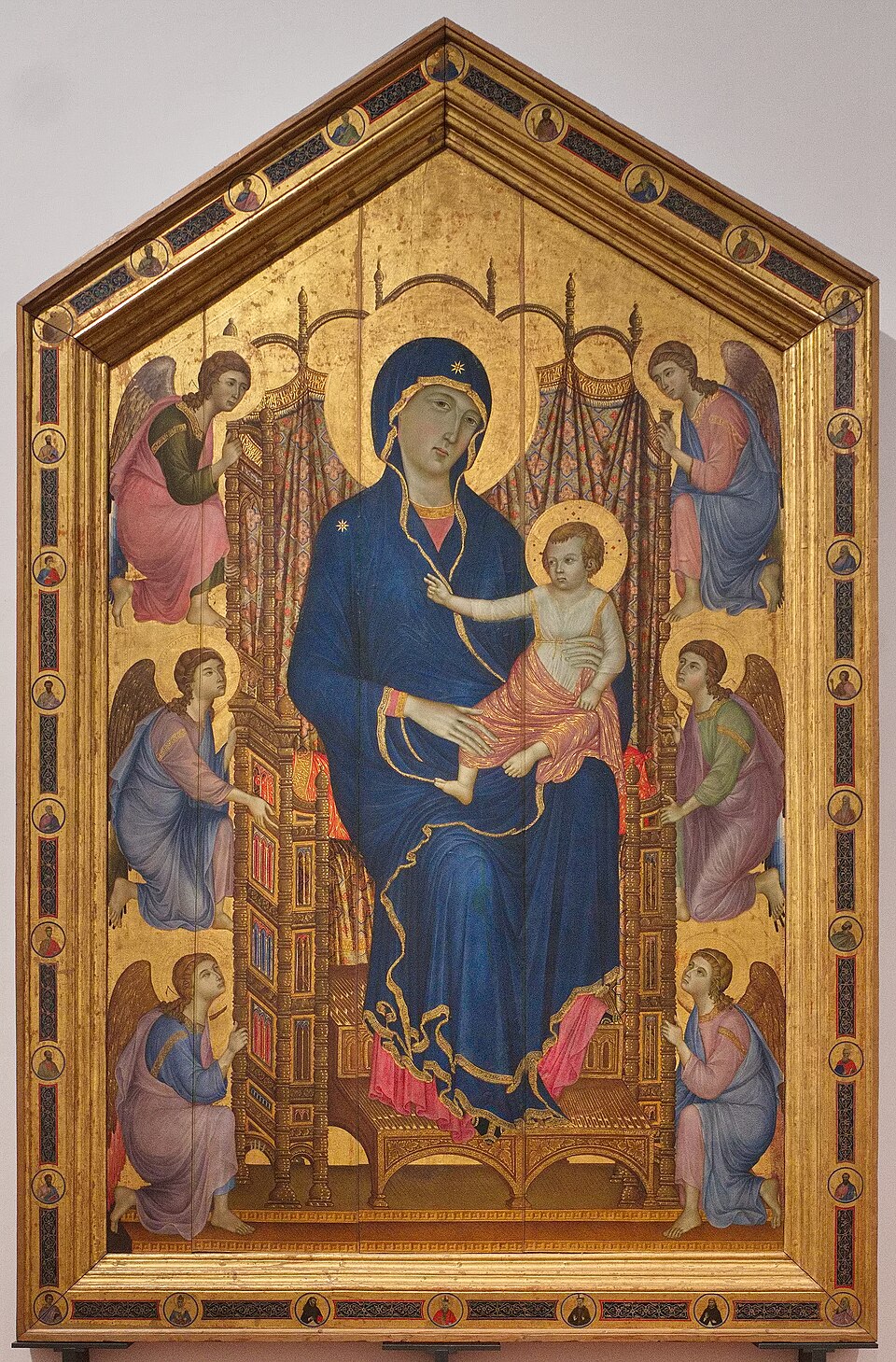
Now look to the left.
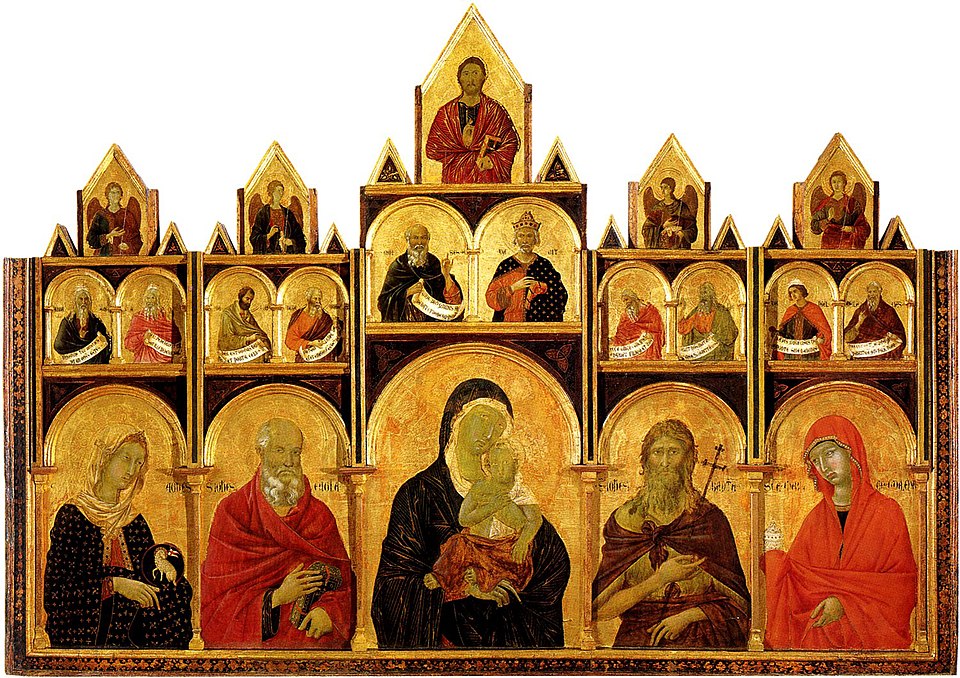
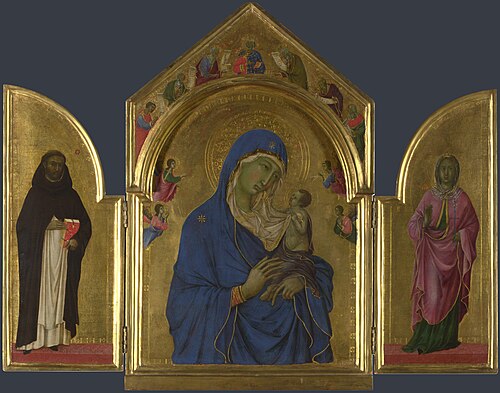
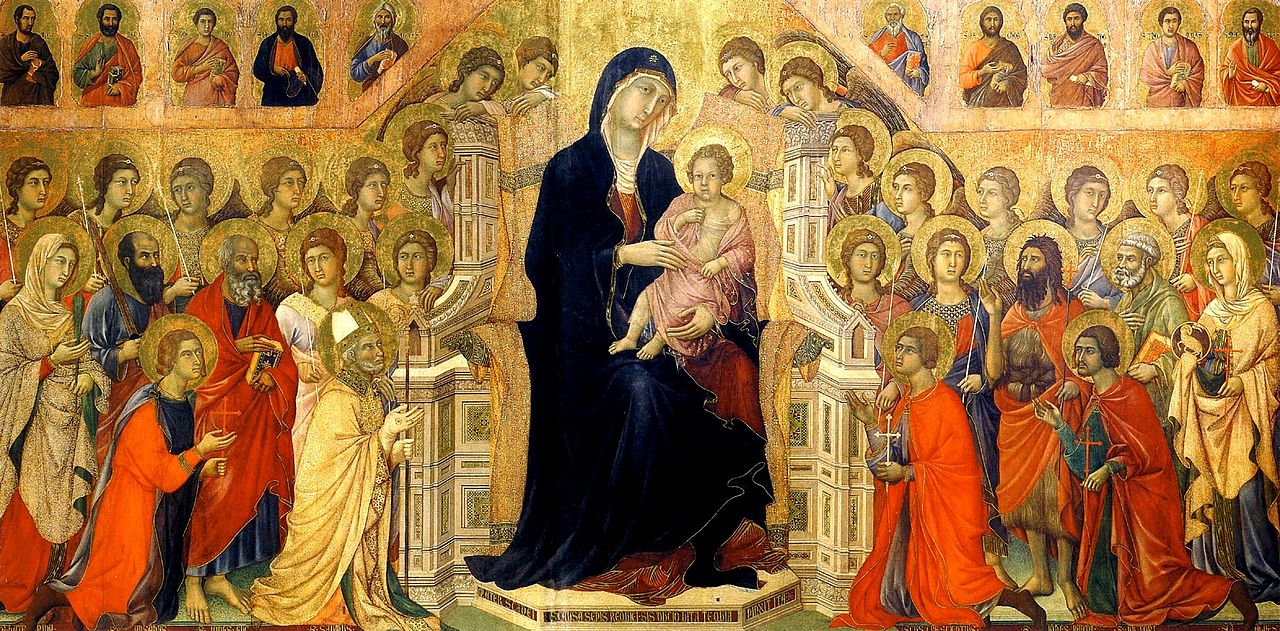
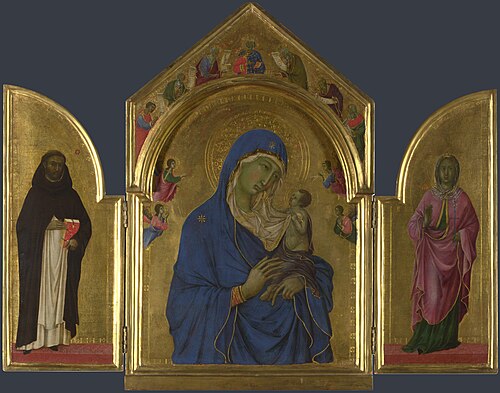
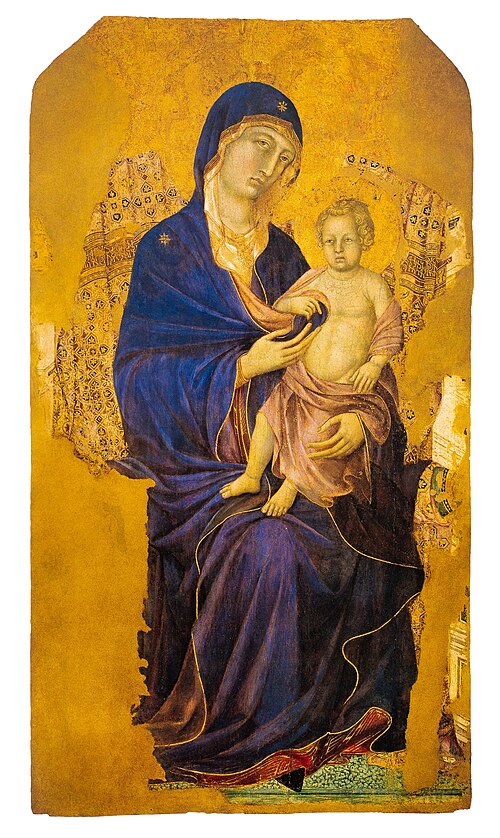
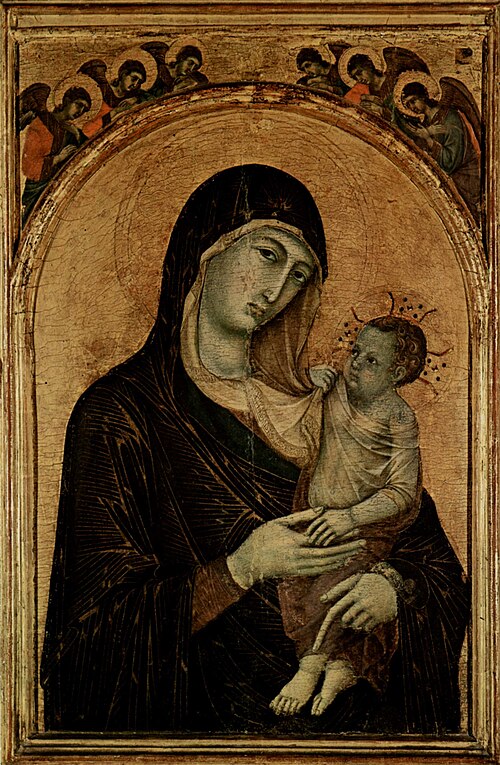
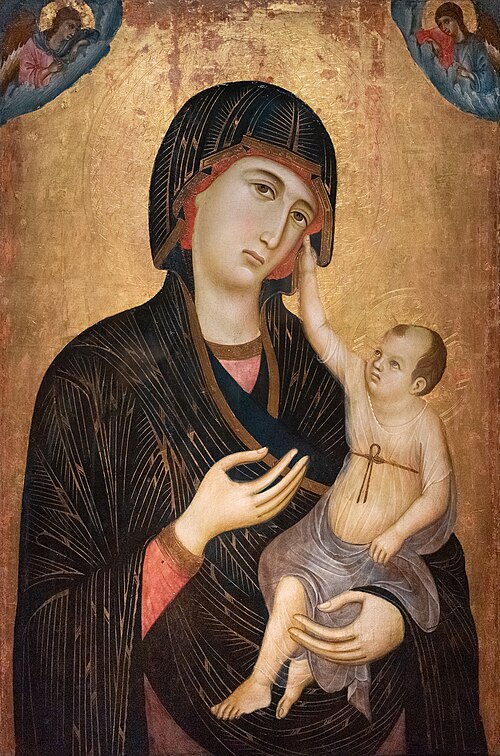
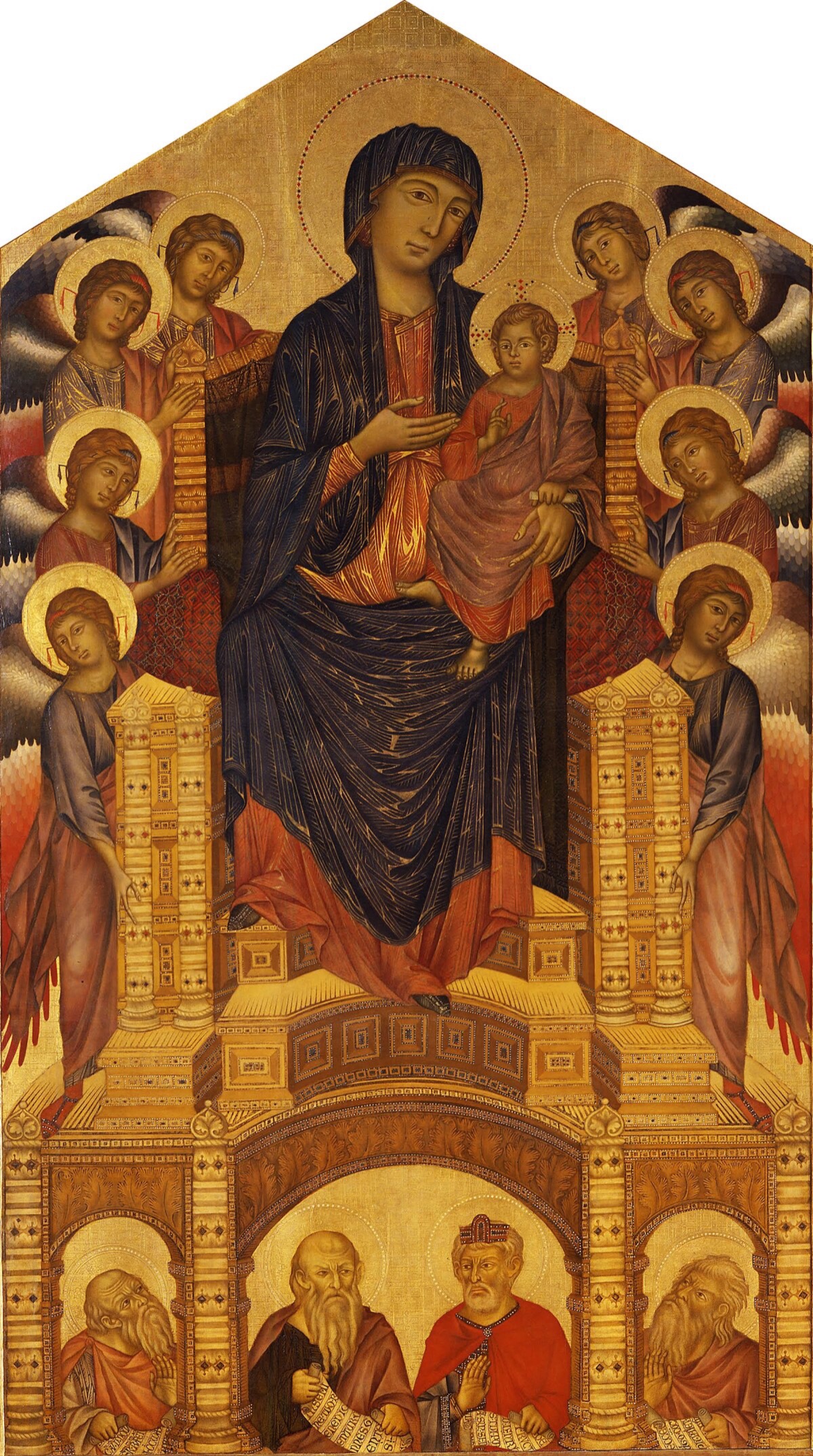
Duccio's Madonna looks almost tender by comparison.
Where Cimabue is severe, Duccio curves - the Madonna's robe falls in softer folds, the angels beginning to turn toward each other.
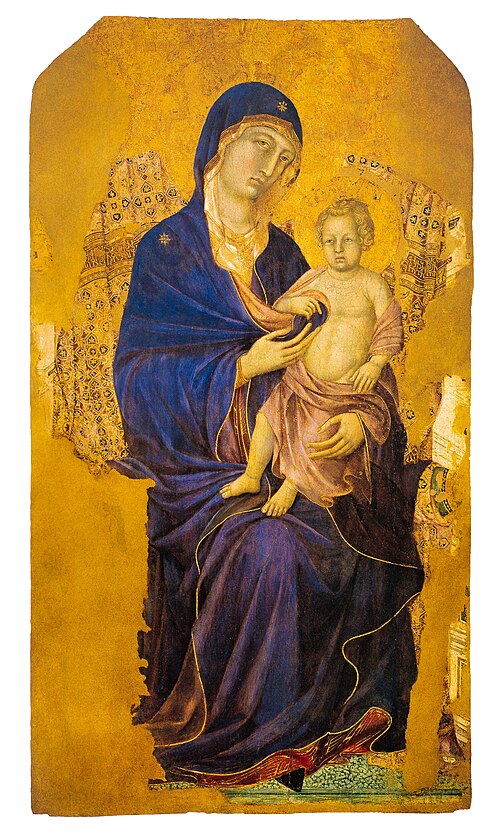
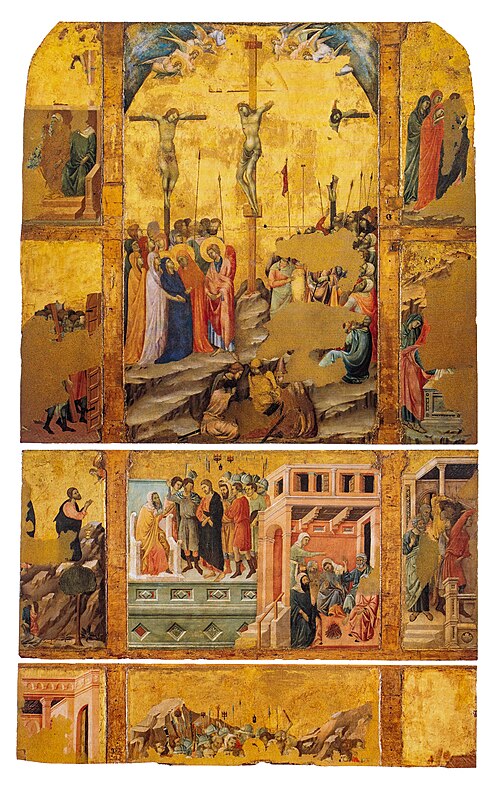
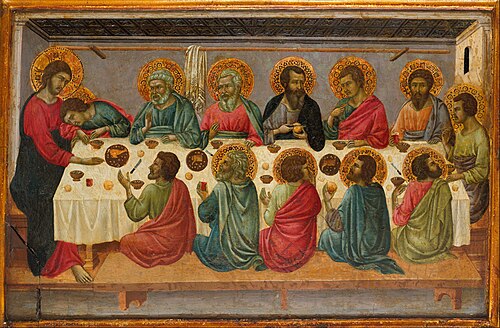
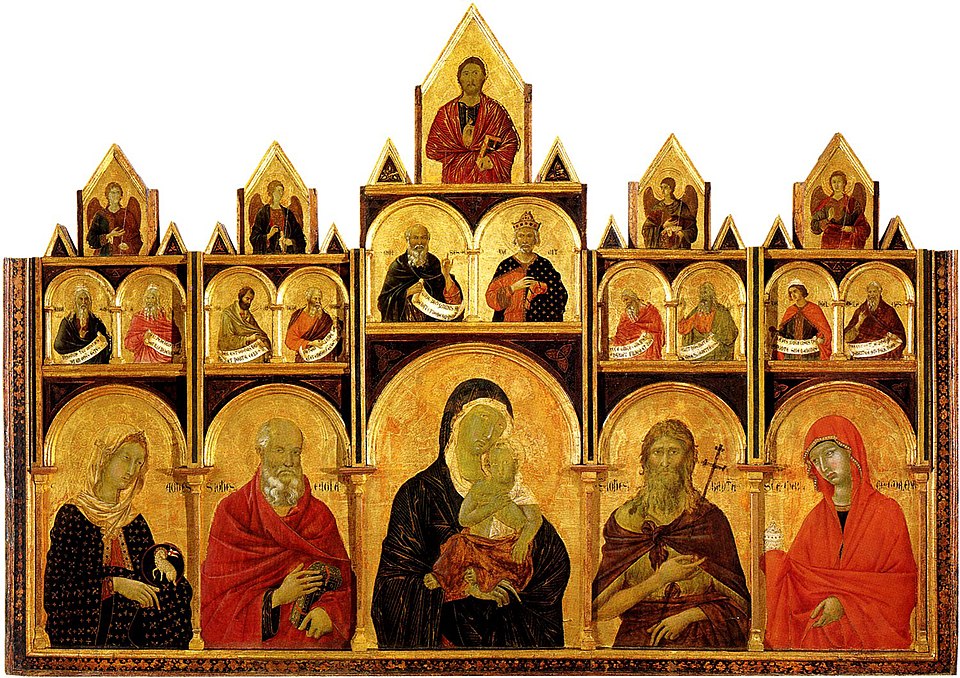
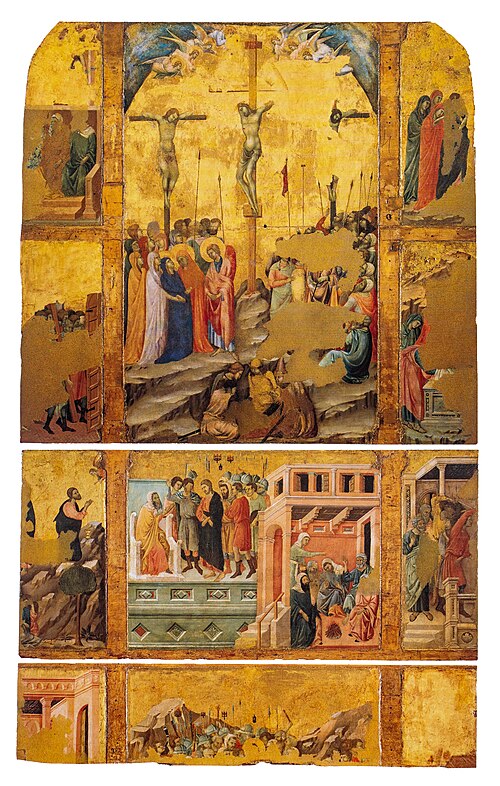
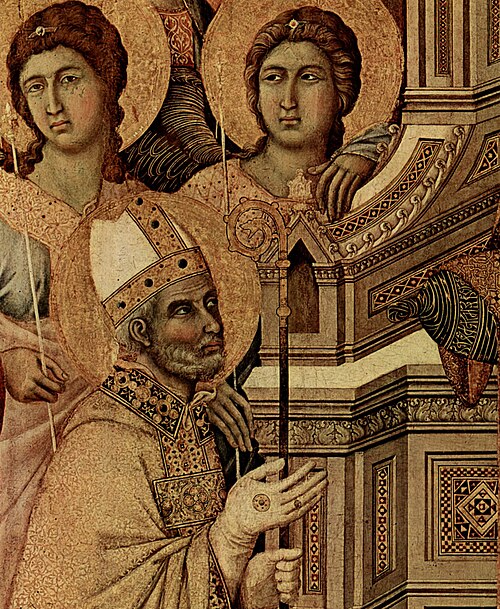
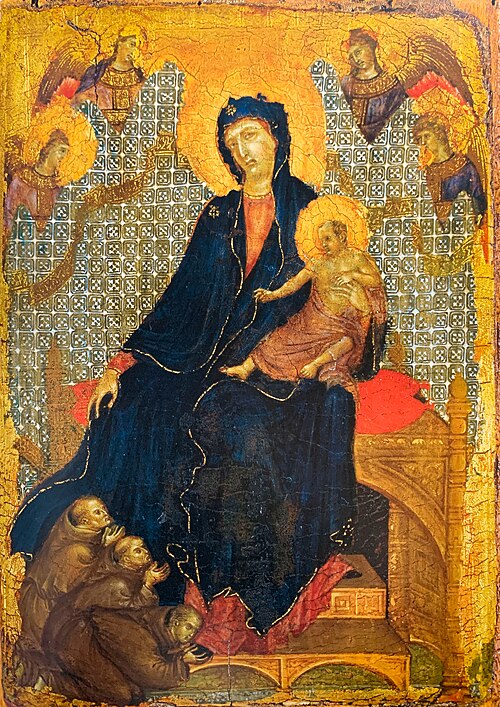
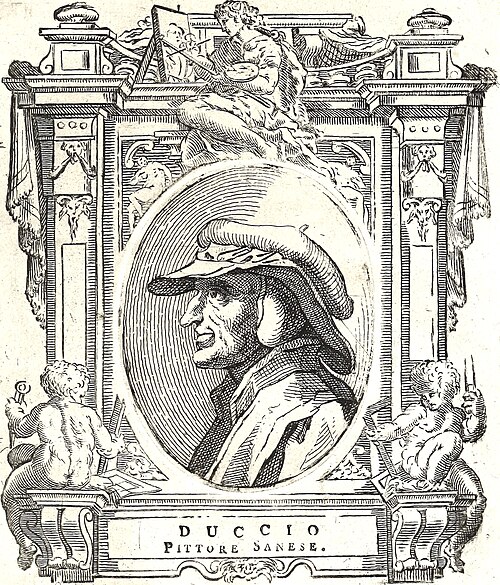
Duccio is considered the father of Sienese painting, and you can already see what that means: thinner, more elegant figures, richer colour, a faint dreamlike quality that Florence never quite had.
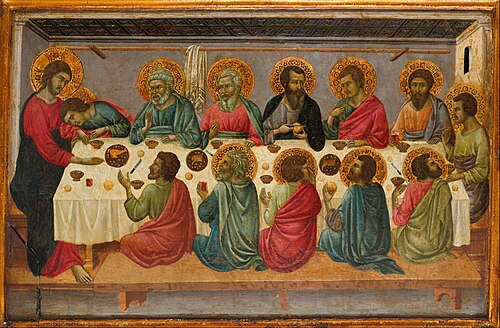
Sienese painting was a world of its own: Byzantine roots, mystical atmosphere, no interest in portraits or classical mythology.
It was less concerned with perspective and proportion than Florence - more concerned with feeling.
Duccio's successors included Simone Martini and the Lorenzetti brothers, all of whom pushed that emotional register further.
Florence eventually won the argument, absorbing Siena's artistic culture in the late 15th century.
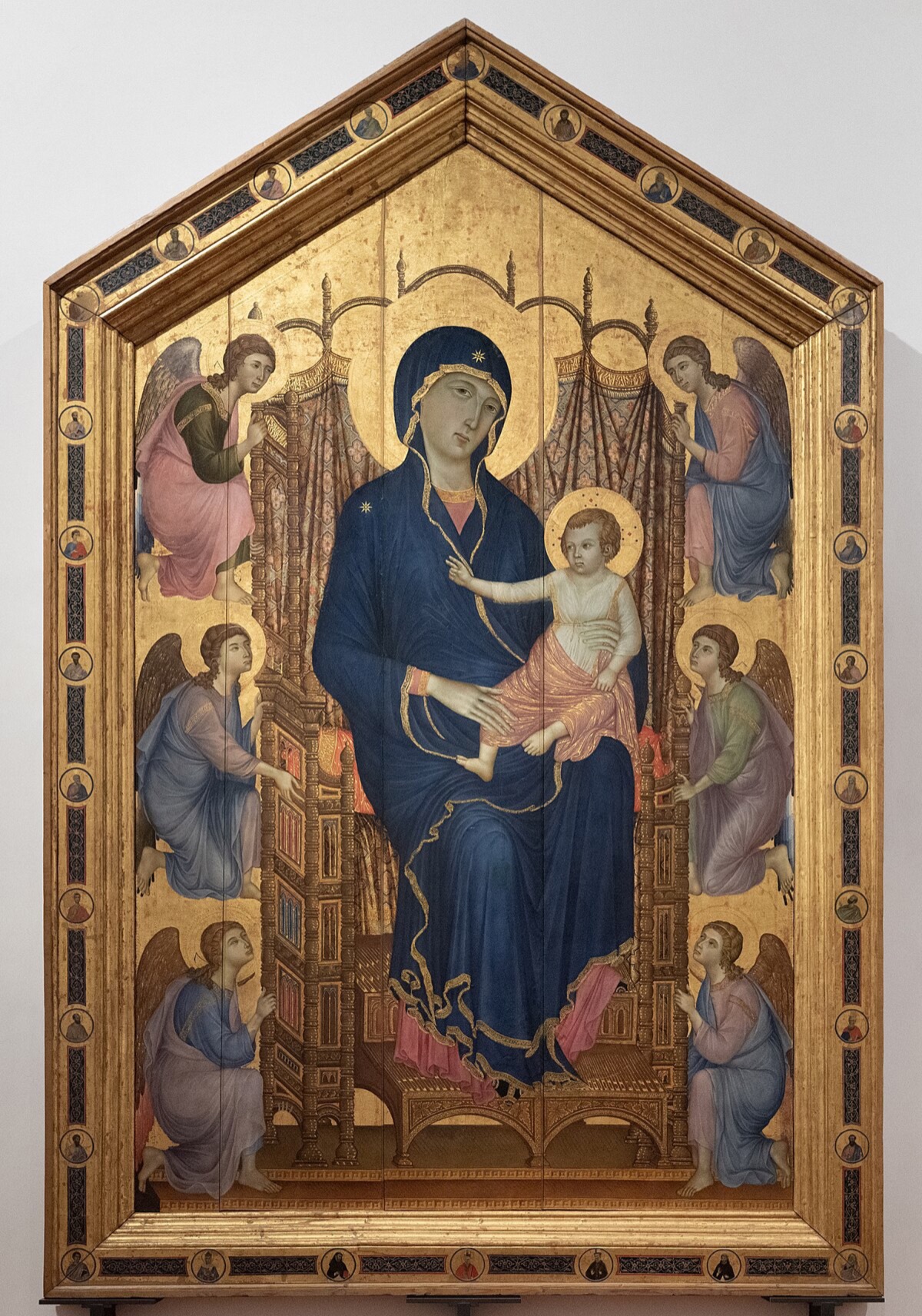
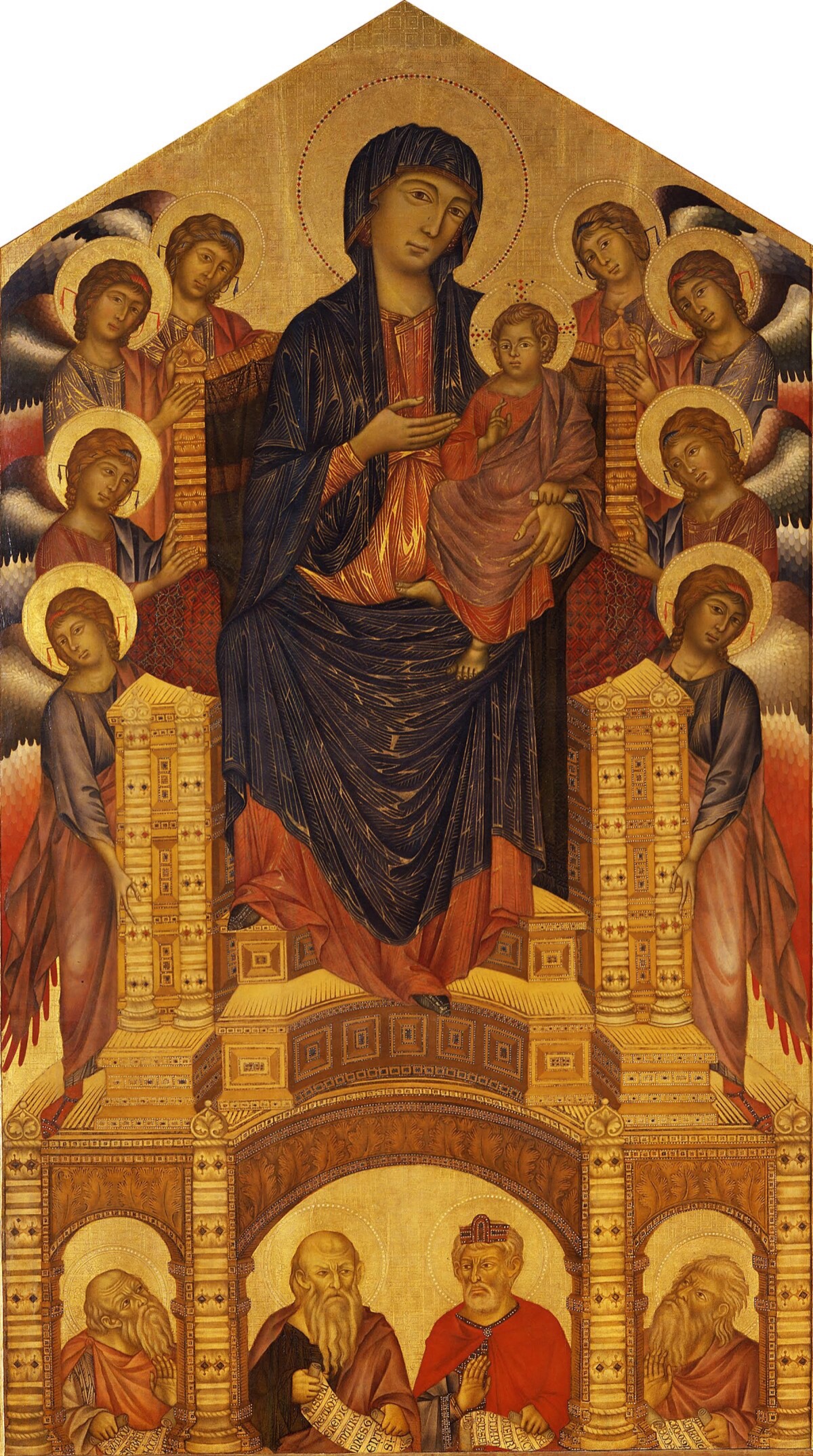
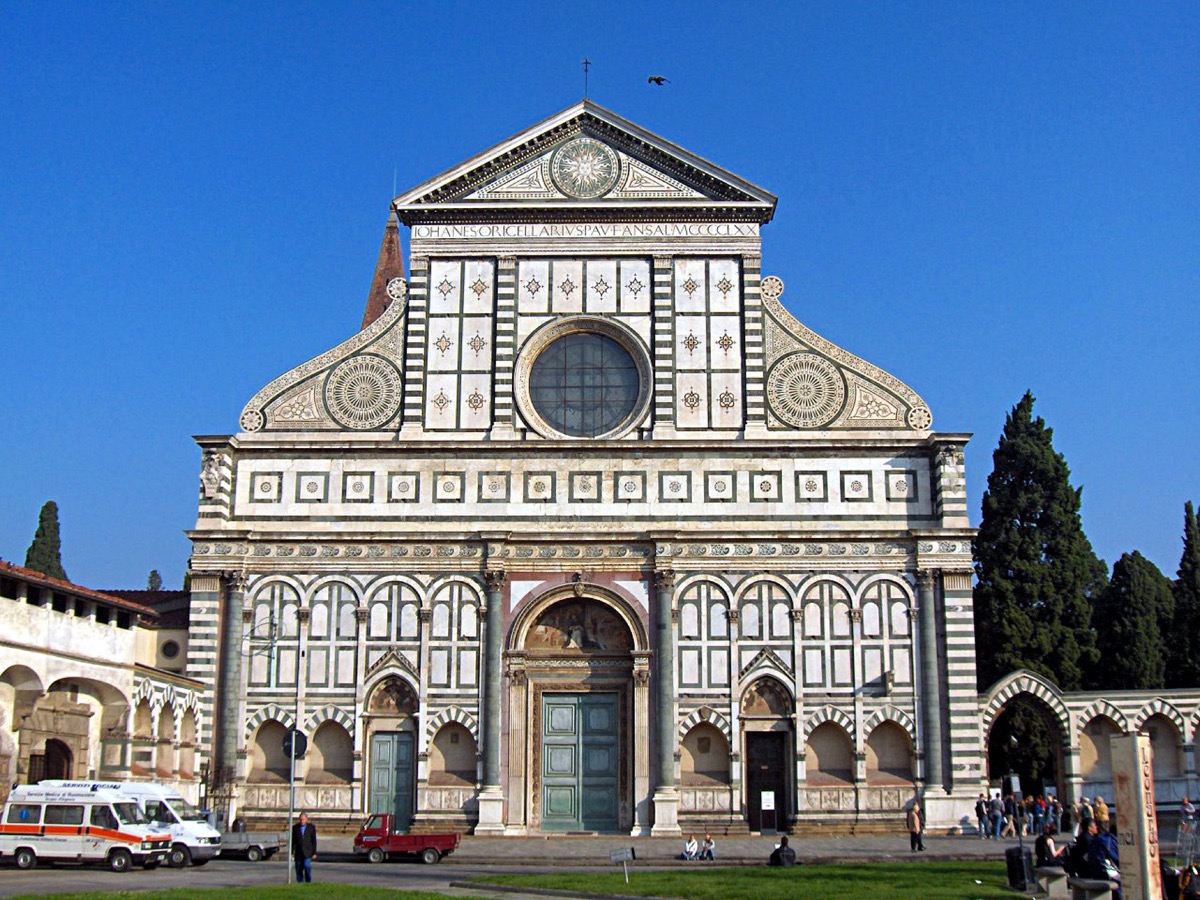
It was commissioned for the church of Santa Maria Novella, where it remained for 663 years before coming to the Uffizi in 1948.
Fun fact: Siena's position was fatally weakened by the Black Death of 1348, which killed two-thirds of its population.
Siena never fully recovered.
Florence did.
Comments
Loading comments...